Selecting a wrongful death attorney is one of the most consequential decisions a grieving family or personal representative can make following a fatal accident. A wrongful death lawsuit is a civil action seeking financial compensation when a loved one’s death is caused by the negligence, recklessness, or wrongful act of another. These cases often involve complex litigation over both economic and non-economic damages against negligent individuals, corporations, healthcare systems, and their insurers.
Because multi-billion-dollar insurance companies immediately mobilize to protect their assets, families should secure legal representation equipped to fight back, navigate jurisdictional rules, and act quickly to preserve critical evidence.
Key Takeaways
- Estate Standing & Proper Plaintiffs: Wrongful death statutes vary by state. Depending on the jurisdiction, claims must be brought by a legally appointed personal representative, an executor of the estate, or specific surviving family members (such as a spouse or child).
- Investigative Speed & Evidence Preservation: Immediate action is critical. Sending formal letters of spoliation puts defendants on notice to preserve vital evidence like Electronic Control Modules (black boxes) or video footage, though legal remedies for destroyed evidence depend on court findings of culpability and prejudice.
- Dual Claims Strategy: Where permitted by state law, families can simultaneously pursue a wrongful death claim for the survivors’ direct losses and a survival action for the victim’s pre-death pain, suffering, and final medical expenses.
- Financial Resources & Experts: Handling catastrophic claims requires substantial capital to retain top-tier forensic economists, biomechanical engineers, and medical experts to prove corporate liability and lifetime financial losses.
- Objective Credential Verification: Inquire about the firm’s trial record, but evaluate it with nuance. While a firm must have the reputation and resources to take a case to a jury, a trial is not always the ultimate goal. In fact, an excessive trial record can sometimes indicate a case was not properly worked up to secure top-dollar pre-trial value, or that a firm is risking a client’s recovery for its own accolades. Major insurance carriers use centralized software to track plaintiff counsel; when a case is meticulously prepared by a firm with proven capability, carriers are often pushed to offer historic settlements to avoid facing them in court. Ultimately, trial carries serious risks and appeal delays—most clients prefer securing a record-setting resolution over an unpredictable courtroom battle. Beware of chest-pounding bravado; look for an advocate focused on securing the highest financial return with the least unnecessary exposure.
- Demand Deep Subject-Matter Expertise: Determine whether the attorney possesses an immediate, deep mastery of the specific field—whether that means complex medical science in malpractice claims or federal safety regulations in trucking disputes. If a lawyer lacks subject-matter fluency during the initial interview, do not let them learn on your dime. Unprepared counsel often lack the leverage to force top-tier settlements, leaving you vulnerable to lowball offers.
What Criteria Should Families Use When Evaluating Wrongful Death Law Firms?
Selecting the right legal representation requires looking beyond basic billboard advertising or self-laudatory claims. Complex litigation against commercial trucking carriers, product manufacturers, or large medical networks demands deep legal acumen and considerable capital.
When interviewing prospective counsel, families should evaluate:
1. Proven Trial Experience & Strategy
Strategic Leverage vs. Unnecessary Trial Risk: Ask about the firm’s reputation, but remember that a high volume of trials isn’t automatically a badge of honor. Pushing every case to a jury can mean the file wasn’t worked up effectively to command maximum settlement value—or that the lawyer is risking your financial recovery for their own reputation. The strongest firms leverage meticulous preparation to force insurance carriers into historic settlements long before trial, protecting clients from courtroom uncertainty and lengthy appeals.
Specialized Industry Mastery: Whether your case involves complex medicine or commercial transport regulations, your lawyer must know the subject matter inside and out from day one. Never hire an attorney who has to learn on your case—they won’t have the expertise required to command top dollar.
2. Access to Qualified Expert Witnesses
Catastrophic injury and fatal accident claims rely heavily on expert testimony. A firm must have the financial bandwidth to fund qualified experts early in the process, including:
- Accident Reconstructionists & Biomechanical Engineers: To re-create collision dynamics and physical forces.
- Medical Specialists: To establish standard of care breaches and causal links to the fatality.
- Forensic Economists & Life-Care Planners: To construct objective financial footprints of lost lifetime support.
3. Verified Credentials and Independent Evaluation
Start by verifying an attorney’s standing directly with official state bar licensing bodies. Because state bars are officially regulated, they are the most critical source for confirming an active license and reviewing any disciplinary history. Once clear standing is established, you can consult online review platforms and legal directories.
Why Are Immediate Investigations and Letters of Spoliation Critical?
In the hours and days following a fatal collision, industrial disaster, or medical emergency, critical evidence can easily be overwritten, altered, or destroyed through standard business practices.
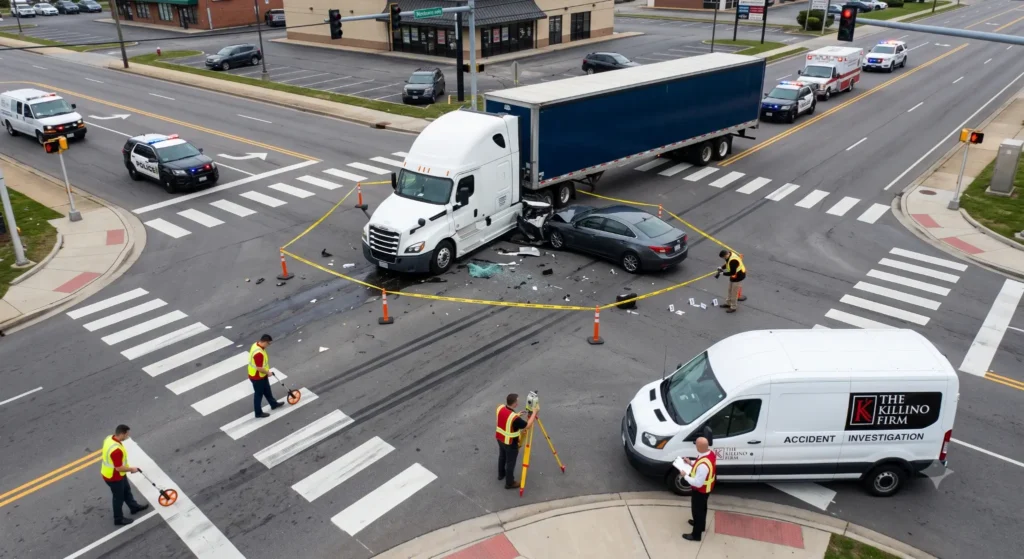
An experienced wrongful death attorney acts immediately by dispatching an investigative team and issuing a formal letter of spoliation. This notice informs the defendant of their legal duty to preserve relevant physical and electronic data.
If a defendant fails to preserve evidence after receiving notice, available court remedies vary by jurisdiction but may include:
- Evidentiary Restrictions: Preventing the defense from introducing certain evidence.
- Monetary Sanctions: Fines imposed on the negligent party or their legal team.
- Adverse Inference Instructions: Directing the jury to presume that the destroyed or missing evidence would have proven the defendant’s liability.
How Are Financial Damages Evaluated in Wrongful Death Claims?
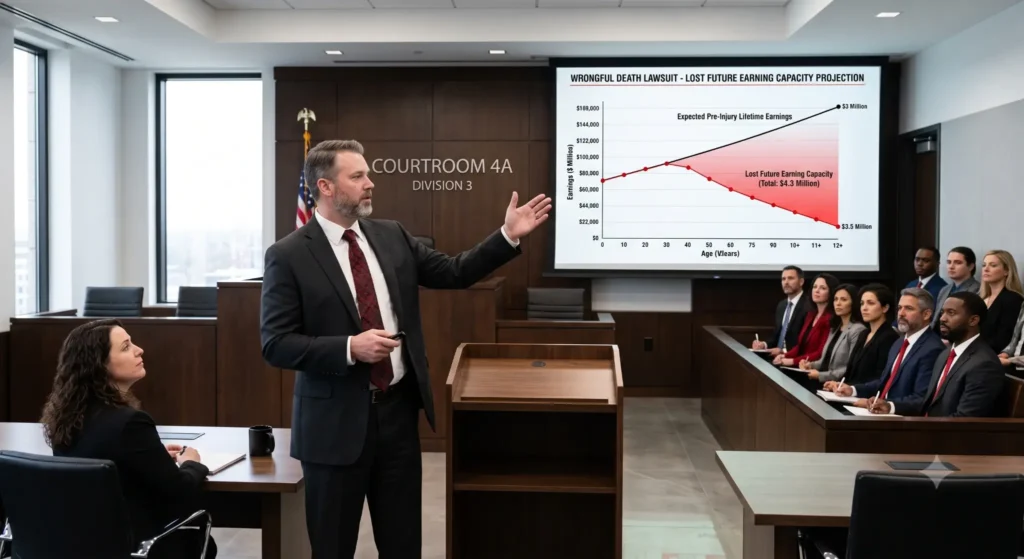
Insurance adjusters often attempt to minimize financial recoveries by using basic salary multipliers. To counter this, elite plaintiff firms partner with independent forensic economists who build comprehensive mathematical models to project the full economic footprint of the deceased.
Economic Component | Analysis & Projections |
Loss of Earning Capacity (Future Earning Capacity) & Inflation | Factors in projected merit raises, promotions, work-life expectancy, and macroeconomic inflation over a multi-decade career. |
Fringe Benefits & Contributions | Quantifies the value of employer-matched 401(k)/pension plans, health insurance, and stock options. |
Household & Domestic Services | Assigns objective market values to daily domestic labor, including childcare, property maintenance, and elder care. |
Present Value Adjustments | Applies economic discount rates to establish the precise lump-sum figure required today to replace long-term lost support. |
Note: Non-economic damages (such as loss of companionship, mental anguish, and loss of guidance), statutory damage caps, and allocation requirements are controlled by state law.
Wrongful Death Claims vs. Survival Actions: What is the Difference?
Understanding the distinction between these two parallel legal actions is essential when pursuing justice after a fatal accident:
- Wrongful Death Claims: Seek compensation for the distinct losses suffered by the surviving beneficiaries (e.g., lost financial support, loss of companionship, emotional distress in some states, and funeral expenses).
- Survival Actions: Preserve the personal injury claims the decedent could have brought had they survived. This action recovers damages sustained by the victim from the moment of injury until death, such as conscious pre-death physical pain, mental suffering, and final medical bills.
An experienced lawyer will evaluate state statutes to determine whether filing both claims simultaneously is permitted and appropriate for the estate.

Frequently Asked Questions About Hiring a Wrongful Death Lawyer
1. How do contingent legal fees and expenses work?
Many personal injury firms handle wrongful death claims on a contingency fee basis, meaning clients pay no upfront legal fees. The firm’s fee is calculated as an agreed-upon percentage of the final recovery. Before signing an agreement, families should clarify whether litigation expenses (such as expert witness fees and filing costs) are deducted before or after the fee calculation.
2. How quickly must a family consult counsel or file a claim?
You should consult counsel as soon as possible. Beyond state-specific statutes of limitations (deadlines by which a lawsuit must be formally filed), claims involving public entities often have strict administrative notice deadlines which may be as short as 30 to 180 days. Prompt retention also ensures scene inspections happen before conditions change.
3. Can a law firm handle a claim that spans multiple states?
Yes. Multi-state legal issues frequently arise in commercial trucking accidents, aviation disasters, or defective product cases. National injury practices coordinate multi-jurisdictional litigation by partnering with local counsel, obtaining pro hac vice admission, and applying nationwide investigative resources while complying with local state procedures.
4. Will my wrongful death case go to trial or settle out of court?
The majority of civil claims resolve through structured negotiations, mediation, or informal settlement discussions. However, if an insurance carrier or corporate defendant refuses to offer fair compensation, taking the case to trial becomes necessary. The Killino Firm thoroughly prepares every case as if it is going to trial and maintains maximum leverage throughout settlement negotiations.
5. Is a civil wrongful death lawsuit tied to criminal prosecution?
No, civil wrongful death actions are completely separate from criminal proceedings. A criminal case focuses on penalizing an offender on behalf of the state, whereas a civil lawsuit focuses strictly on financial recovery for the estate and surviving family members. A civil case can proceed independently—regardless of whether criminal charges are filed or result in a conviction—though the civil court may temporarily delay (stay) proceedings if the defendant invokes their Fifth Amendment right against self-incrimination while criminal charges are pending.
Partner with The Killino Firm
The Killino Firm stands as a fierce, nationally recognized advocate for families devastated by corporate negligence, medical malpractice, commercial trucking collisions, and fatal accidents. Backed by top-tier trial experience, premier standings on Avvo and Super Lawyers, and a 5.0-star Google rating, our catastrophic injury team possesses the financial strength and legal strategy needed to hold major corporations accountable.
If you have lost a loved one due to someone else’s negligence, contact The Killino Firm today for a free, confidential consultation to understand your legal rights and preserve your family’s future.
Disclaimer: This guide provides a general informational overview regarding wrongful death litigation in 2026 and does not constitute formal legal advice.