NATIONALLY RECOGNIZED
Maternal Death Lawyers
Maternal Death Recoveries
Hundreds of Millions of Dollars Have Been Recovered for Personal Injury and Wrongful Death Victims
Fill out and submit the form below for a confidential legal review:
"*" indicates required fields
Support for Families Facing Maternal Death and Legal Action
If you are a family who has lost a loved one to maternal death and are considering legal action, understanding your rights and the process of a maternal death wrongful death lawsuit is crucial. Maternal mortality is a devastating event, and many families are left searching for answers and accountability. Knowing how wrongful death lawsuits work can empower families to seek justice, hold negligent healthcare providers accountable, and secure the financial resources needed to rebuild their lives after such a loss.
For over two decades, The Killino Firm has represented families devastated by preventable maternal deaths. Our nationally recognized maternal death lawyers combine deep medical knowledge with aggressive litigation to hold negligent healthcare providers accountable — and to secure the financial resources grieving families need to rebuild their lives.


Key Takeaways: Understanding Your Rights in a Maternal Mortality Case
If your family is grieving the preventable loss of a mother, navigating the clinical and legal aftermath can feel completely overwhelming. Before diving into the deep legal mechanics of a claim, here are the most critical facts you need to know right now:
- What Constitutes a Maternal Death Case? A maternal death is legally and medically classified as the passing of a woman during pregnancy or within 42 days post-childbirth from any cause related to or aggravated by the pregnancy or its clinical management.
- Are Most Maternal Deaths Preventable? Yes. Federal data from the Centers for Disease Control and Prevention (CDC) reveals that a significant share of climbing U.S. maternal mortality rates are entirely preventable and frequently trace back to a direct breach of the medical standard of care.
- What are the Dual Legal Vehicles for Financial Recovery? Families can aggressively pursue two distinct legal claims: Wrongful Death Claims (to compensate surviving spouses and children for loss of financial support, parental guidance, and companionship) and Survival Claims (to recover for the conscious physical pain, emotional suffering, and medical bills the mother endured prior to passing).
- How Long Do You Have to File a Claim? The statute of limitations varies dramatically by state. For example, Pennsylvania strictly enforces a two-year deadline from the date of death, while other states impose urgent pre-filing requirements, such as early expert affidavits or mandatory defendant notifications. Missing a deadline can permanently bar your recovery in any state.
- What Does It Cost to Hire a National Malpractice Firm? The Killino Firm operates strictly on a contingency fee structure. This means there are absolutely zero upfront, out-of-pocket, or hourly legal fees. We advance all forensic medical record acquisition costs and independent expert retainers; you pay nothing unless we successfully win your case.

What Is a Maternal Death Wrongful Death Lawsuit?
A wrongful death lawsuit related to maternal death is a civil legal action filed by surviving family members. These lawsuits aim to hold healthcare providers accountable for preventable deaths during pregnancy or childbirth. Negligence is often a core issue in wrongful death lawsuits related to maternal mortality, and proving negligence requires showing that a healthcare provider breached the standard of care. The burden of proof lies in establishing causation between negligence and the death. Medical malpractice is defined as care that falls below the accepted standard, leading to patient harm. Families can file wrongful death lawsuits for maternal deaths.


What Is Maternal Mortality and Why Is It a Legal Issue in the United States?
The World Health Organization defines maternal mortality as the death of a woman during pregnancy or within 42 days of the end of pregnancy from a cause related to or aggravated by the pregnancy or its management. What the medical definition fails to capture is how frequently these deaths are preventable — and how often they are the direct result of medical negligence.
According to the Centers for Disease Control and Prevention, the United States recorded a maternal mortality rate of 32.9 deaths per 100,000 live births in 2021, the highest rate among high-income nations. While other developed countries have steadily reduced maternal deaths over the past two decades, the U.S. rate has climbed. Peer-reviewed research and federal investigations consistently conclude that a significant share of these deaths could have been prevented with timely, appropriate medical care. When a mother dies because a doctor, hospital, or healthcare team failed her, her family has the legal right to pursue accountability.


What Are the Most Common Medical Errors That Cause Preventable Maternal Deaths?
Preventable maternal deaths most frequently stem from failure to recognize, monitor, or treat known obstetric emergencies in a timely manner. These conditions are among the leading causes of preventable maternal death caused by negligence:
- Postpartum Hemorrhage:
Postpartum hemorrhage is the single leading direct cause of maternal death globally, yet hospitals with proper protocols and trained staff can stop life-threatening severe bleeding in most cases. When nursing staff fail to monitor blood loss, physicians delay intervention, or blood products are unavailable or not ordered promptly, excessive bleeding that should be survivable can become fatal. - Preeclampsia and Eclampsia:
Preeclampsia and eclampsia — dangerously elevated blood pressure during or after pregnancy — require ongoing monitoring and, in severe cases, medication and early delivery. Untreated preeclampsia can progress to seizures and organ failure. Missed blood pressure readings, failure to order laboratory work, or discharging a patient with uncontrolled hypertension are among the most litigated forms of obstetric negligence. - Sepsis:
Sepsis during pregnancy and the postpartum period progresses rapidly. When providers fail to recognize early signs of infection, delay appropriate antibiotics, or postpone transfer to a higher level of care, a treatable infection can become deadly. - Pulmonary Embolism:
Pulmonary embolism, a blood clot traveling to the lungs, is a leading cause of postpartum death. Chest pain is one warning symptom that should trigger urgent evaluation, especially because pregnant and postpartum women are at elevated risk and standard prophylaxis protocols already exist. - Cesarean Section Complications:
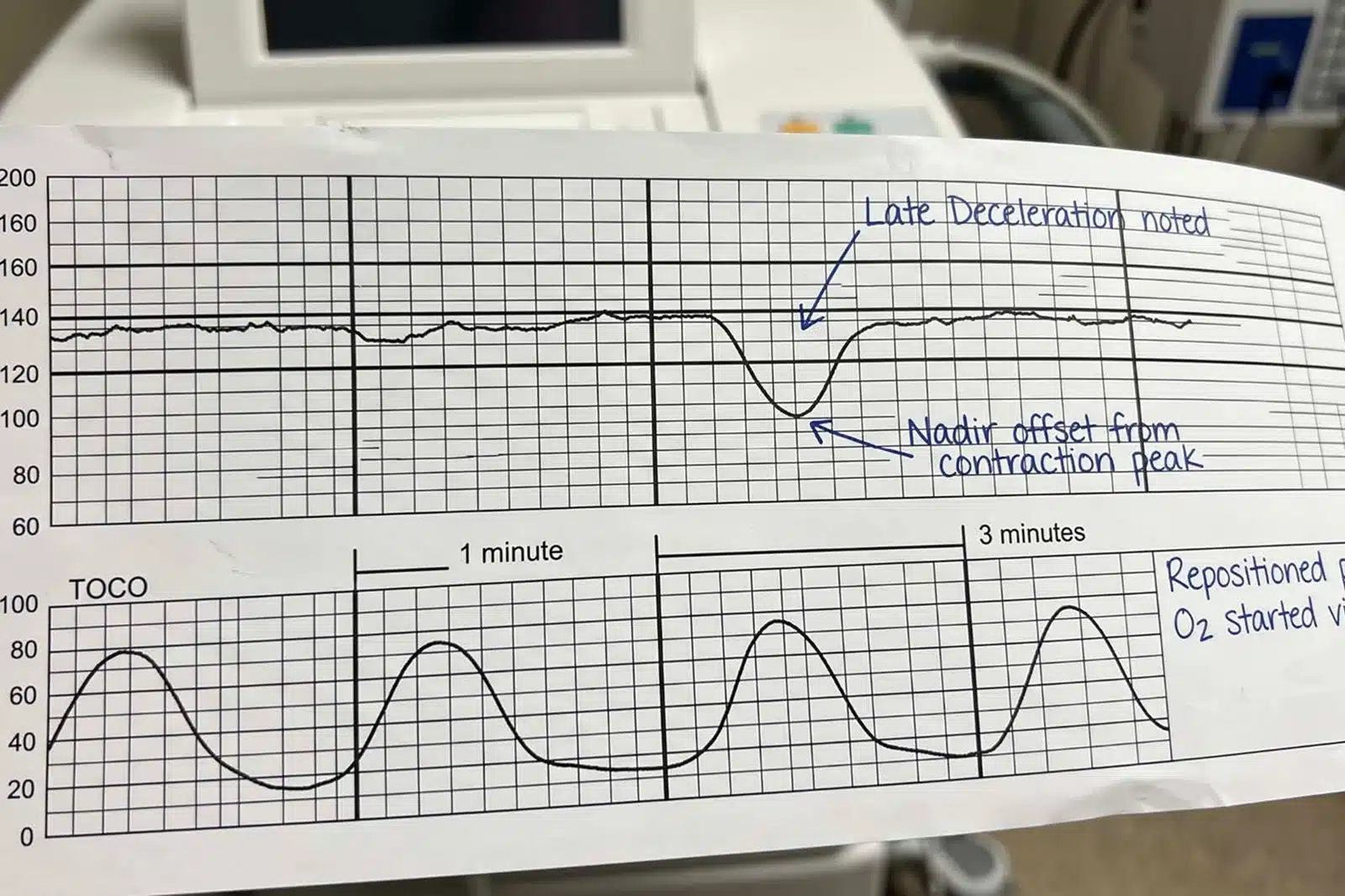
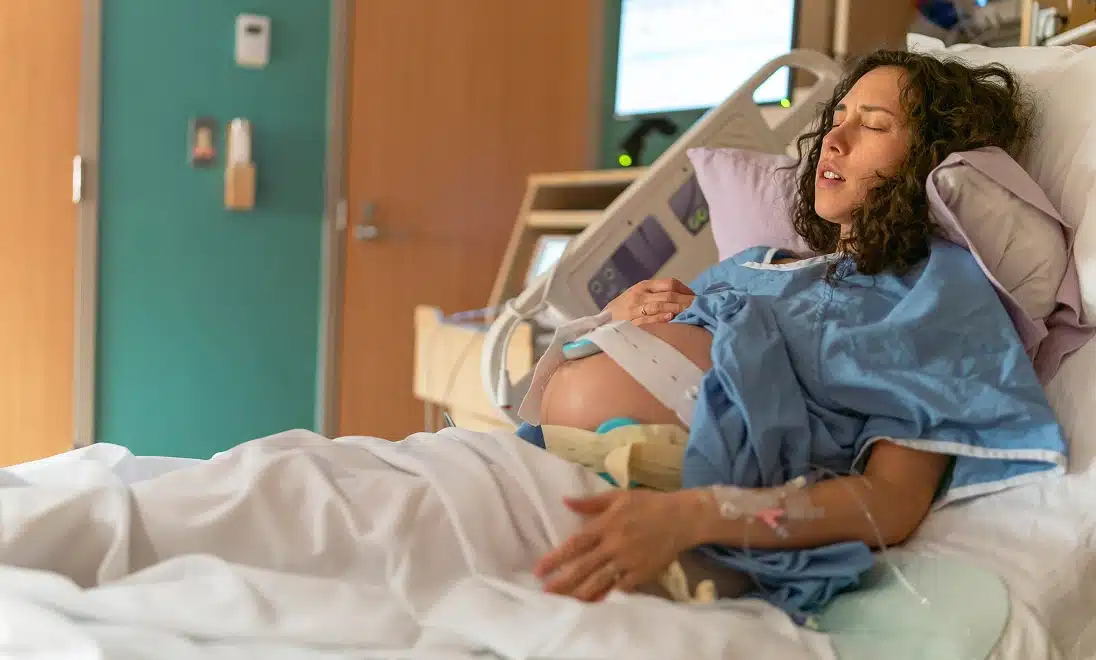
Delayed or mismanaged cesarean sections — including failures to perform an emergency C-section when fetal monitoring indicates distress, or anesthesia complications during delivery — can endanger both the mother and baby. - Medication Errors:
Medication errors, including incorrect dosing of oxytocin, magnesium sulfate, or anesthetics, can trigger cardiac arrest, respiratory failure, or hemorrhage. - Communication Failures:
Communication failures between nursing staff, obstetricians, and consulting physicians are a root cause identified in maternal mortality reviews nationwide. When teams fail to monitor vital signs or recognize warning signs, serious complications can escalate into fatal outcomes.


What Are the Warning Signs of Obstetric Negligence During Labor and Delivery?
How Do Racial Disparities in Maternal Care Create Legal Claims for Minority Families?
The maternal mortality crisis does not affect all women equally. According to CDC data, Black women in the United States are three times more likely to die from pregnancy-related causes than White women — a disparity that persists across income levels, education, and age groups. Indigenous women face similarly disproportionate risks.
These disparities are not a matter of biology. Peer-reviewed studies, federal investigations, and maternal mortality review committees across the country have identified systemic contributors: implicit bias in clinical decision-making, delayed responses to Black patients reporting pain or distress, limited access to quality prenatal care, and failures in postpartum follow-up.
From a legal standpoint, when a healthcare provider dismisses a Black patients reported symptoms, delays diagnostic testing, or provides a lower standard of care than would be offered to a white patient, a medical malpractice claim can be brought to address the negligence and discriminatory care.
The Killino Firm’s maternal death attorneys have experience investigating the full clinical picture — including whether implicit bias played a role in a family’s loss. We work with medical experts who review the standard of care applied in each case, identify deviations, and provide testimony that connects those deviations to the outcome.

What Legal Claims Can a Family File After a Maternal Death Caused by Medical Negligence?
A wrongful death lawsuit related to maternal death is a civil legal action filed by surviving family members. These lawsuits aim to hold healthcare providers accountable for preventable deaths during pregnancy or after childbirth. Negligence is often a core issue in wrongful death lawsuits related to maternal mortality, and proving negligence requires showing that a healthcare provider breached the standard of care. The burden of proof in a wrongful death lawsuit lies in establishing causation between negligence and the death. Medical malpractice is defined as care that falls below the accepted standard, leading to patient harm. Families can file wrongful death lawsuits for maternal deaths.
When a mother dies from preventable pregnancy-related complications, a death during childbirth or shortly after pregnancy may support a claim when the death was due to medical negligence. Surviving family members generally have two overlapping legal vehicles in these medical malpractice cases:
Wrongful Death Claims
Wrongful death claims are brought on behalf of the surviving family — a spouse, children, or other statutory beneficiaries — for the losses they suffer as a result of the death. Recoverable damages typically include loss of financial support the mother would have provided, loss of companionship and consortium, loss of parental guidance, funeral and burial expenses, and, if permitted under state law, emotional pain.
Survival Claims
Survival claims pursue damages the deceased mother herself suffered before death — including physical pain and suffering, emotional distress, emotional pain, and medical expenses incurred during the hospitalization.
In wrongful death lawsuits, the burden of proof is showing that negligence occurred and caused the death.
The precise claims available, the recoverable damages, and the procedural requirements — including statutes of limitations — vary significantly by state. The Killino Firm’s attorneys are experienced navigating the specific procedural requirements of each jurisdiction.
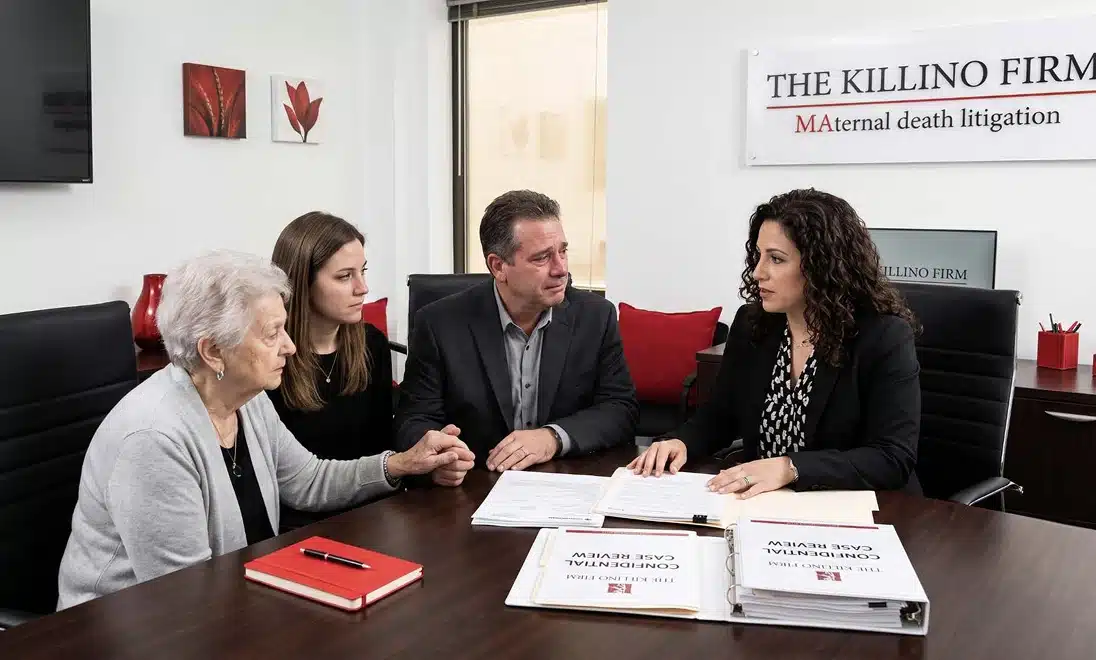
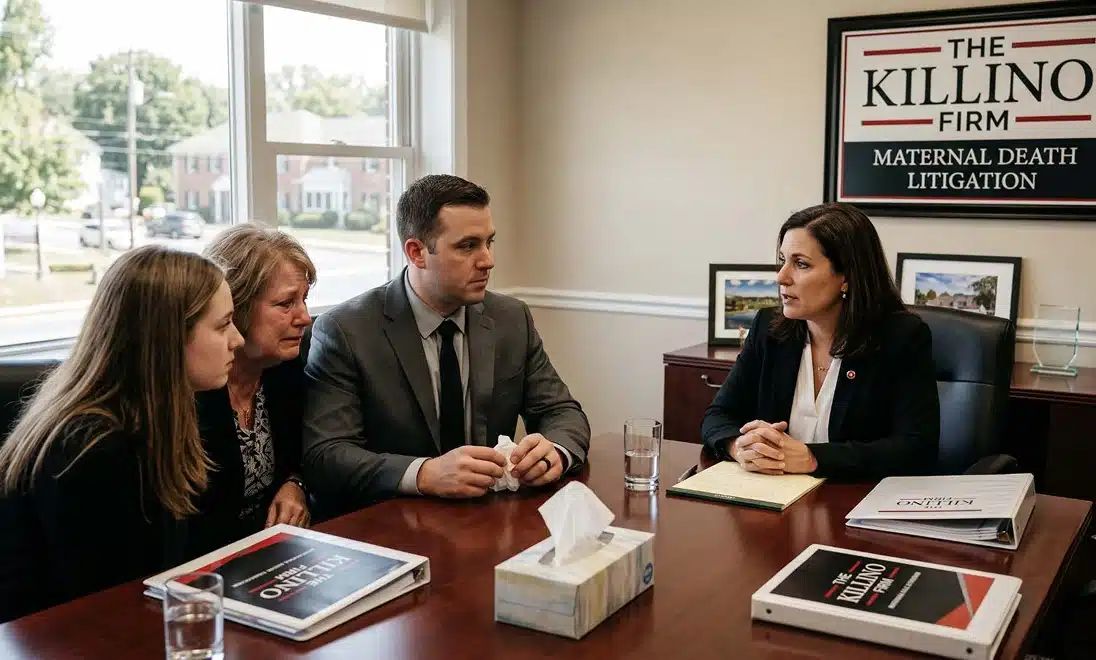
Every maternal death case begins with a free, confidential doctor-and-lawyer review. Our team requests and analyzes the complete medical record, works to gather evidence, identify responsible parties, consults with board-certified obstetric experts, and provides an honest assessment of the claim before a family decides to move forward.
What Compensation Can Families Recover in a Maternal Death Lawsuit?
The Killino Firm has recovered hundreds of millions of dollars for personal injury and wrongful death victims, including families who lost a mother to preventable obstetric complications. Families may seek compensation to relieve the financial burden created by a preventable maternal death, and The Killino Firm’s areas of practice reflect the breadth of serious injury and wrongful death claims they handled nationwide, but compensation in these cases is highly fact-specific, and categories commonly pursued include:
Economic Damages
Economic damages cover the financial losses that flow directly from the death: the present value of the income and benefits the mother would have earned over her working life; the cost of replacing the household services and childcare she provided; and out-of-pocket medical bills, medical, and funeral expenses.
Non-Economic Damages
Non-economic damages address losses that cannot be reduced to a paycheck — the grief and anguish of a surviving spouse; a child’s loss of a mother’s guidance, nurturing, and presence through childhood and beyond; and the loss of the marital relationship, which is why many families also seek justice through claims that pursue both accountability and compensation.
Punitive Damages
Punitive damages may be available in cases involving particularly reckless or egregious conduct — for example, a hospital that knowingly understaffed a labor and delivery unit or suppressed documentation of a patient’s deteriorating condition.
Courts and juries in maternal death cases can return significant verdicts because the human cost is so profound and so visible. An infant left without a mother, a spouse left without a partner, and children who grow up knowing their mother’s death was avoidable — these are facts that resonate in any courtroom.


How Much Is a Maternal Death Lawsuit Worth? Understanding Wrongful Death Damages
How Does The Killino Firm Investigate a Maternal Death Case?
Proving medical malpractice in a maternal death case requires a level of clinical expertise and investigative rigor that this law firm brings to catastrophic injury and maternal death investigations from day one. The Killino Firm’s approach begins the moment a family contacts us and continues through trial if necessary.
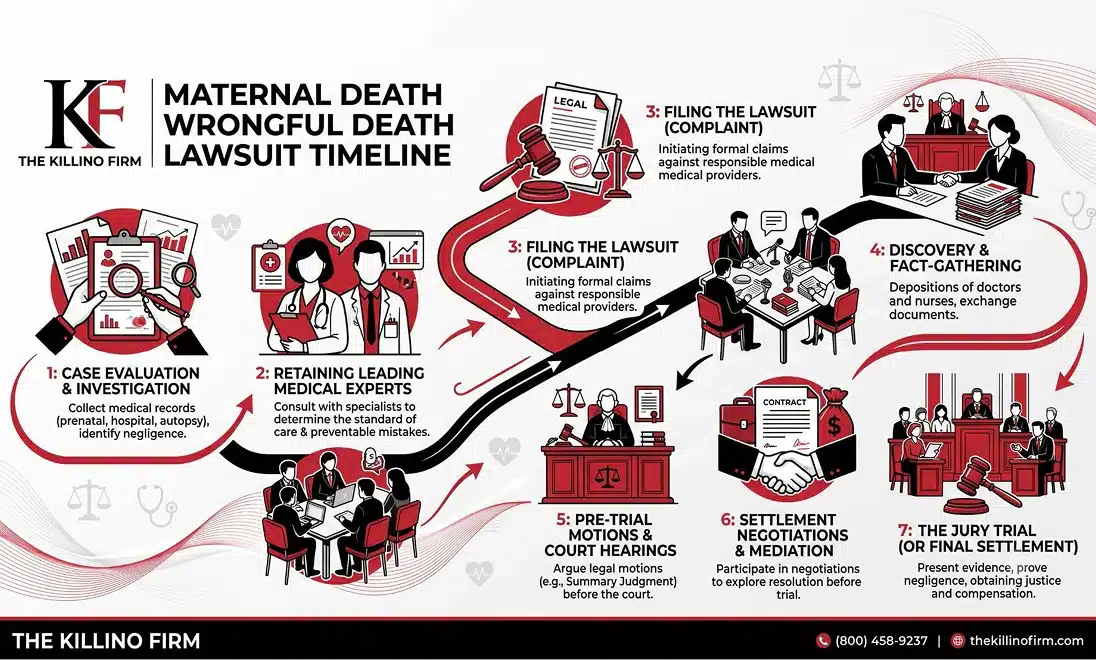
Step 1 — Confidential doctor-and-lawyer review
Proving medical malpractice in a maternal death case requires a level of clinical expertise and investigative rigor that this law firm brings to catastrophic injury and maternal death investigations from day one. The Killino Firm’s approach begins the moment a family contacts us and continues through trial if necessary.
Step 1 — Confidential doctor-and-lawyer review
Before we ask a family to make any commitment, our legal and medical team reviews the basic facts. Families describe what happened; we listen, ask targeted questions, and assess whether the death may have resulted from medical error or negligent medical professionals.
Step 2 — Complete medical record acquisition
We obtain every relevant record — prenatal visits, hospital admission and discharge records, nursing notes, fetal monitoring strips, operative reports, pathology and autopsy reports, and pharmacy records. We review those records closely for failures by medical providers or negligent medical providers. In maternal death cases, the postpartum records are often as important as the labor and delivery records.
Step 3 — Independent expert review
We work with leading medical experts, and our experienced maternal death attorneys coordinate that review in detail. We retain board-certified obstetricians, maternal-fetal medicine specialists, and, where appropriate, cardiologists, infectious disease physicians, and anesthesiologists to evaluate the care provided by medical professionals. Our experts assess whether the treating providers met the applicable standard of care, whether proper medical care was provided, and, if not, whether the deviation caused or contributed to the death.
Step 4 — Case development and filing
Our litigation team prepares a detailed complaint supported by expert analysis, including whether delayed treatment contributed to fatal complications, navigates state-specific procedural requirements (including certificate-of-merit requirements in many jurisdictions), and pursues maximum recovery through settlement negotiation or trial against negligent medical providers.
Step 5 — Ongoing support
The Killino Firm’s commitment does not end when the case resolves. We remain available to our clients as they navigate life after an unimaginable loss.


What Is the Statute of Limitations for Filing a Maternal Death Lawsuit?
The deadline to file a maternal death or wrongful death lawsuit varies by state and begins to run at different points depending on jurisdiction — making prompt legal consultation essential. Some states impose additional procedural pre-filing requirements, such as providing notice to a defendant or obtaining an expert affidavit before the complaint is accepted.
Missing a filing deadline is fatal to a case — courts almost universally dismiss claims filed after the statute of limitations has run, regardless of the strength of the underlying facts. Families who suspect negligence should contact an experienced maternal death attorney as soon as possible, both to preserve legal options and to allow adequate time to obtain and review the medical record before the deadline arrives.
The Killino Firm accepts maternal death consultations on a no-cost, no-obligation basis and can quickly identify the applicable deadline for a family’s specific circumstances, and families can contact a national injury lawyer to discuss their potential claim.


How Long Does a Maternal Death Lawsuit Take — and What Is the Process?
Why Do Families Choose The Killino Firm to Handle Maternal Death Cases?
Jeffrey Killino and his legal team have spent over two decades building one of the country’s most recognized practices in birth injury, NICU law, and wrongful death — including maternal death cases that other firms turned away.** The firm’s national reputation is built not on advertising, but on outcomes: multi-million-dollar recoveries for families who trusted us with the worst moment of their lives.
Families who work with The Killino Firm receive:
- Direct access to experienced attorneys. Clients speak with the lawyers handling their cases — not rotating staff or intake coordinators. Jeffrey Killino personally stays involved in cases from evaluation through resolution.
- Medical and legal integration. The complexity of a maternal death case demands attorneys who understand obstetric medicine as well as they understand trial procedure.The Killino Firm's team has prosecuted cases involving hemorrhage, sepsis, preeclampsia, anesthesia error, and C-section delay — and has the retained expert relationships to support each of them.
- A contingency fee structure. Families pay nothing unless and until we recover on their behalf. There is no upfront cost to retain The Killino Firm, no hourly billing, and no out-of-pocket expense to pursue a case, which aligns with the firm's broader role as acatastrophic injury lawyer for severely harmed clients.
- True National Reach. The Killino Firm is a nationally recognized law firm dedicated to clients across the entire United States. We offer comprehensive nationwide case evaluation and aggressive legal representation. Our commitment to justice knows no boundaries, and we are equipped to handle complex legal matters concerning maternal death on a national scale.
- Proven outcomes. Hundreds of millions of dollars recovered. Families who now have the financial security to care for surviving children, cover medical costs, and move forward — not because their loss has been undone, but because justice was pursued and won.

What Should a Family Do Immediately After Suspecting a Maternal Death Involved Negligence?
Time and evidence preservation are critical, especially if there were warning signs of life threatening complications before the death. Families should:
- Request and preserve all medical records as soon as possible. Hospitals are required to retain records, but families have the right to request copies immediately. Do not wait. These records may help show failures to monitor vital signs, respond to high blood pressure, or address other medical conditions and risk factors.
- Document everything from memory. Write down every conversation with medical staff, every concern that was raised and how it was addressed, every name of a nurse or physician involved in care. Include what family members personally observed, such as chest pain, excessive bleeding, or other severe complications. Memory fades; contemporaneous notes do not.
- Avoid signing releases without legal counsel. Hospital risk management departments or insurance representatives may contact grieving families shortly after a death. Do not sign any release or settlement offer without first consulting a maternal death attorney. We can help identify responsible parties and seek justice after a mother's death caused by medical negligence.
- Contact The Killino Firm for a free, confidential consultation. Our team will review the circumstances, explain your legal options, and connect you with the medical experts needed to evaluate the case — at no cost and with no obligation to proceed, drawing on our broadercatastrophic injury lawyer experience to support grieving families.
The loss of a mother is among the most devastating events a family can endure. When that loss was preventable — when a doctor missed the signs, a nurse failed to escalate, or a hospital system prioritized efficiency over safety — accountability is not just possible. It is necessary.
The Killino Firm is ready to help your family pursue it.

Common Questions
What is maternal mortality?
Maternal mortality refers to the death of a woman while pregnant or within 42 days of the end of pregnancy, irrespective of the duration and site of the pregnancy, from any cause related to or aggravated by the pregnancy or its management, but not from accidental or incidental causes. (World Health Organization) 2
How common is maternal mortality in the United States?
The U.S. maternal mortality rate is alarmingly high compared to other developed countries. In 2021, the rate was 32.9 deaths per 100,000 live births, a significant increase from previous years. (CDC) This means that for every 100,000 live births, approximately 33 women died due to pregnancy-related complications.
What are the leading causes of maternal death?
Several factors contribute to maternal mortality, including:
- Cardiovascular conditions: Heart conditions and stroke are leading causes of maternal death, accounting for approximately 15-20% of pregnancy-related deaths.
- Hemorrhage: Severe bleeding is another major cause, responsible for about 10-15% of maternal deaths.
- Infection: Infections during pregnancy or postpartum can lead to sepsis and other life-threatening complications, contributing to around 10% of deaths.
- Preeclampsia and eclampsia: These pregnancy-related hypertensive disorders can cause serious complications for both mother and baby.
- Mental health conditions: Suicide and drug overdoses are also contributing factors to maternal mortality.
Are there racial disparities in maternal mortality?
Yes, unfortunately, there are significant racial disparities in maternal mortality rates in the U.S. Black women are three times more likely to die from a pregnancy-related cause than White women. (CDC) These disparities persist across age groups, education levels, and socioeconomic status.
What are some of the reasons for the racial disparities?
The reasons behind racial disparities are complex and multifaceted, but they are rooted in systemic inequities and implicit bias within the healthcare system:
- Implicit Bias: Studies have shown that implicit bias among healthcare providers can lead to differences in the quality of care received by Black and minority women.
- Access to Care: Black women are more likely to face barriers to accessing quality prenatal and postpartum care, including lack of insurance, limited access to healthcare providers, and transportation challenges.
- Pre-existing Conditions: Black women are more likely to have pre-existing health conditions that can increase the risk of pregnancy complications.
- Stress and Trauma: The cumulative impact of stress, trauma, and discrimination can negatively impact Black women’s health and pregnancy outcomes.
What is a "near miss" maternal mortality?
A “near miss” maternal mortality refers to a situation where a woman nearly dies due to pregnancy, childbirth or postnatal complications but survives. These cases often involve severe complications, such as hemorrhage, eclampsia, or sepsis, that require intensive medical intervention.
How can maternal deaths be prevented?
Addressing the maternal mortality crisis requires a multi-pronged approach:
- Improved access to care: Ensuring that all women have access to quality prenatal and postpartum care, regardless of their race, ethnicity, or socioeconomic status.
- Early detection and intervention: Improving early detection and treatment of pregnancy complications.
- Standardized protocols: Implementing standardized protocols for managing obstetric emergencies, such as postpartum hemorrhage.
- Better communication and coordination: Enhancing communication and coordination among healthcare providers involved in maternal care.
- Addressing racial disparities: Tackling the systemic racism and implicit bias that contribute to higher maternal mortality rates among Black and Indigenous women.
- Mental health support: Expanding access to mental health services for pregnant and postpartum women.
What is the role of a maternal death lawyer?
A maternal death lawyer concentrate in representing families who have lost a loved one due to pregnancy, childbirth or postnatal complications. Our maternal death lawyers can help families:
- Investigate the circumstances of the death: Determine if medical negligence or other factors contributed to the death.
- Gather evidence: Collect medical records, expert testimony, and other evidence to support a wrongful death claim.
- Negotiate with insurance companies: Seek a fair settlement for the family’s losses.
- File a lawsuit: If necessary, file a lawsuit and represent the family in court.
What types of damages can be recovered in a maternal death lawsuit?
A maternal death lawsuit can help families recover compensation for various losses, including:
- Loss of financial support: The income and benefits the deceased mother would have provided to her family.
- Loss of companionship and consortium: The emotional loss and loss of support suffered by the family.
- Funeral expenses: The costs of the funeral and burial.
- Medical expenses: Any medical expenses incurred before the mother’s death.
- Pain and suffering: In some cases, damages for the mother’s pain and suffering before her death.
What should I do if I suspect my loved one's death was caused by medical negligence?
If you believe that medical negligence played a role in your loved one’s death, it’s crucial to:
- Gather medical records: Obtain copies of all medical records related to the pregnancy, childbirth, and postpartum care.
- Contact The Killino Firm: Consult with our experienced maternal death attorneys as soon as possible to discuss your legal options.
- Preserve evidence: Keep any relevant documentation, such as communications with healthcare providers or photos related to the care received.
Testimonials
Courtney S

Reggie B
Corey E
Jeanne Y
Trisha H
Michaelene C
Rhonda L
The Killino Firm Changes Lives
In the aftermath of a wrongful death or catastrophic injury, particularly those involving babies and children, victims and their families are forced into the new “normal”. Their lives are often characterized by multiple facets of struggle; physical, medical and financial. The worry and stress can be unbearable. But, that is where the Killino Firm steps in.
Time and again for over two decades Jeffrey Killino has changed the lives of his clients and their families with recoveries that will provide for all future medical care and day to day needs. The Killino Firm clients are regularly purchasing new homes and vehicles; securing much needed medical care and assistance; and sleeping better at night know there are millions of dollars to take care of them for the rest of their lives.
Yes, the Killino Firm regularly secures multi-million dollar settlements and/or verdicts, however, we measure our true success in terms of how we change our clients’ lives. The Killino Firm is dedicated to its clients and their plight. After the cases are over, the Killino Firm stays involved and available to it’s clients as the journey continues.
At the Killino Firm we care about our clients and we care about our community, which is why from time to time when we uncover a hazard or danger with the potential to harm others, the Killino Firm takes action to alert the public and appropriate regulatory authorities.