NATIONALLY RECOGNIZED
Hundreds of Millions of Dollars Have Been Recovered for Medical Malpractice Victims
"*" indicates required fields
A sepsis-induced amputation occurs when healthcare providers fail to timely diagnose or treat a systemic infection, allowing septic shock to restrict peripheral blood flow and cause irreversible tissue necrosis. When clinical delays, improper medication administration, or ignored diagnostic markers directly cause the loss of a limb, affected patients have the legal right to file a medical malpractice lawsuit against the responsible medical professionals and healthcare facilities.


A sepsis-related amputation is a surgical procedure performed after severe systemic infection, septic shock, impaired perfusion, or tissue necrosis causes irreversible limb damage. Medical malpractice occurs when a healthcare provider’s negligent act or omission—such as an unreasonable delay in recognizing or treating an infection—causing limb-threatening tissue damage.
Sepsis is a life-threatening condition involving infection-associated organ dysfunction. According to data from the Centers for Disease Control and Prevention (CDC), approximately 1.7 million adults in the United States develop sepsis each year. Furthermore, statistics compiled by the Sepsis Alliance indicate that thousands of Americans undergo amputations annually due to complications arising directly from septic shock.
Severe infection and septic shock can impair peripheral circulation through hypotension, endothelial injury, microvascular dysfunction, and thrombosis. During septic shock, dangerously low blood pressure and abnormalities in the microcirculation reduce tissue oxygenation.
When healthcare providers fail to meet the accepted standard of care—such as missing early diagnostic indicators or delaying treatment—the risk of tissue death escalates. While vasopressors are often necessary to maintain blood pressure during septic shock, mismanaging these medications or delaying antibiotic therapy can leave limbs starved of oxygen, making surgical amputation the only remaining option to save the patient’s life.
Medical negligence contributes to sepsis limb loss through delayed recognition of systemic infection, inappropriate or delayed antimicrobial therapy, inadequate monitoring of hemodynamic support, and failure to execute timely surgical source control. These clinical oversights allow a manageable localized infection to escalate into permanent tissue necrosis.
Our team of medical malpractice lawyers conducts thorough reviews of medical records to evaluate potential clinical failures:


Liability is evaluated by establishing that a professional duty of care existed, the provider breached the applicable standard of care through action or inaction, and this breach directly caused compensable harm such as limb loss. Claims require qualified medical evidence rather than merely a poor clinical outcome.
Proving a medical malpractice claim involves meeting specific legal thresholds:
Our catastrophic injury legal team analyzes complete Electronic Health Records (EHR), nursing flowsheets, laboratory trends, telemetry data, and audit trails. We consult independent medical experts—including intensivists, infectious disease specialists, vascular surgeons, and emergency physicians—to construct a comprehensive, evidence-based timeline of care.


Recoverable damages in a sepsis amputation lawsuit include economic losses such as past and future medical expenses, loss of earning capacity, and lifetime prosthetic care, as well as non-economic damages for physical pain, disfigurement, and emotional distress.
The financial and personal impact of catastrophic limb loss is lifelong. According to published data from the Amputee Coalition, individuals living with limb loss face substantial lifetime healthcare costs and ongoing functional challenges.
| Category of Damage | Specific Types of Recovery Included for Sepsis Lawsuit |
|---|---|
| Medical Expenses | Hospitalization, ICU care, emergency interventions, corrective surgeries, wound care, and physical therapy. |
| Prosthetic & Assistive Care | Initial prosthetic fitting, custom sockets, high-activity components, lifetime replacements, routine repairs, and mobility aids. |
| Lost Income & Earning Capacity | Direct replacement of income lost during hospitalization and recovery, plus compensation for permanent loss of future earning potential. |
| Home & Vehicle Adaptations | Accessibility modifications including wheelchair ramps, roll-in showers, widened doorways, and specialized vehicle hand controls. |
| Physical & Emotional Harm | Physical pain, phantom limb pain, permanent disfigurement, psychological trauma, depression, and loss of enjoyment of life. |
| Family-Related Losses | Loss of consortium or companionship damages as authorized by state-specific laws. |


A certified life care planner evaluates the victim’s long-term medical, rehabilitation, functional, and daily living requirements to create an itemized, projected lifetime care budget. This expert plan ensures that settlement negotiations or trial verdicts accurately account for lifetime care costs.
A life care plan provides an objective framework for calculating future financial needs:
A survival action recovers damages for the pain, suffering, and medical expenses endured by the victim prior to death, whereas a wrongful death claim compensates surviving statutory beneficiaries for their financial and emotional losses resulting from the death.
When severe sepsis leads to amputation and ultimately proves fatal, state law defines how claims proceed:
Survival Actions: Preserve the legal rights the injured person held prior to passing. Filed by the personal representative of the estate, it seeks recovery for pre-death physical pain, mental anguish, hospital expenses, and lost income.
Wrongful Death Claims: Pursued directly by surviving family members (such as a spouse, children, or parents). This claim seeks compensation for loss of financial support, funeral and burial expenses, and loss of companionship, guidance, and sometimes emotional support.


Filing deadlines are governed by state-specific statutes of limitations and statutes of repose, which dictate the exact timeframe within which a medical malpractice action must be formally commenced. Failure to meet these deadlines permanently bars recovery.
Because legal rules differ by jurisdiction, several key procedural factors must be evaluated:
Potentially responsible parties include attending physicians, emergency physicians, intensivists (an intensivist is a medical doctor who specializes in critical care medicine, managing critically ill or injured patients in an Intensive Care Unit), nurses, consulting surgeons, hospitals, health systems, and staffing agencies. Liability can be direct or vicarious depending on state law and employment relationships.
Establishing liability often involves examining both individual and institutional practices:


The Killino Firm is a nationwide catastrophic injury and medical malpractice law practice dedicated to holding negligent healthcare providers, hospitals, and corporate entities accountable. Our catastrophic injury legal team reviews complex medical records, consults with leading medical experts, and applies rigorous legal strategy to advocate for sepsis amputation survivors and their families nationwide.


Filing deadlines vary by state law. Presuit notices, statutes of repose, and administrative rules for government-operated facilities can significantly shorten your timeline. Contact our team of Sepsis Amputation Malpractice lawyers as soon as possible to evaluate the deadlines specific to your jurisdiction.
Yes. The central legal question is typically not whether the amputation became necessary at the moment it was performed, but whether earlier medical negligence directly caused or contributed to the severe tissue necrosis that made amputation unavoidable.
No. An informed consent form acknowledges the known risks of a medical procedure, but it does not grant healthcare providers permission to commit medical negligence. Providers must always adhere to accepted standards of care.
It can, depending on the circumstances. While vasopressors are standard critical care medications for septic shock, a claim may arise if clinicians failed to properly monitor tissue perfusion, mismanaged drug titration, or delayed other necessary interventions.
There is no universal average settlement. Case recovery depends on the clear establishment of liability, proof of causation, the extent of limb loss, age, future life care needs, earning history, and applicable state statutory damage caps.
At The Killino Firm, qualifying matters are handled on a contingency-fee basis. Clients pay no upfront out-of-pocket costs, and legal fees are collected only if a financial recovery is successfully obtained.
Case duration varies based on medical record procurement, expert witness reviews, presuit requirements, court scheduling, and discovery. Each matter progresses according to its unique legal and factual complexities.
Proving hospital negligence requires comprehensive evidence including medical records, nursing flowsheets, vital sign logs, laboratory data, pharmacy administration records, hospital protocols, and testimony from board-certified medical experts.
Yes. Surviving family members or the representative of the decedent’s estate may pursue survival actions and wrongful death claims to recover medical costs, pre-death pain and suffering, lost financial support, and funeral expenses.
Our legal team secures all complete health records and audit trails, collaborates with medical experts across relevant specialties, analyzes state-specific malpractice statutes, and builds an evidence-based timeline of care.
We contacted this firm when our son suffered a birth injury. They listened to our potential case and took us on. They helped us all the way through the process, always took my calls and questions. Killino is very passionate about his work and it felt like he was upset for our son like he was his own child. The paralegal, Kayla, was always on top of things and helpful. The whole firm that we worked with really did their best for us and now we have what we need to care for our son. We couldn’t be more grateful.
Jeff and his team at Killino Law Firm are truly exceptional! They took on my daughter’s challenging case when no one else would, and their dedication, expertise, and compassion made all the difference. Thanks to their amazing work, we can now take care of our daughter for the rest of her life. Jeff handled everything with professionalism and kept us informed every step of the way. If you’re in need of a personal injury & accident lawyer, look no further—Jeff is your guy. I can’t recommend him and his exceptional team enough!
The Killino firm is an excellent firm that tirelessly advocates on behalf of their clients. I’ve come across a lot of great personal injury attorneys in my time and simply put, Killino is the best.
Courtney S

Reggie B
Corey E
Jeanne Y
Trisha H
Michaelene C
Rhonda L
In the aftermath of a wrongful death or catastrophic injury, particularly those involving babies and children, victims and their families are forced into the new “normal”. Their lives are often characterized by multiple facets of struggle; physical, medical and financial. The worry and stress can be unbearable. But, that is where the Killino Firm steps in.
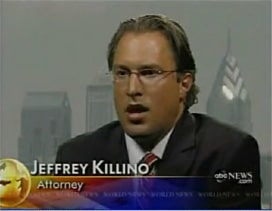
Time and again for over two decades Jeffrey Killino has changed the lives of his clients and their families with recoveries that will provide for all future medical care and day to day needs. The Killino Firm clients are regularly purchasing new homes and vehicles; securing much needed medical care and assistance; and sleeping better at night know there are millions of dollars to take care of them for the rest of their lives.
Yes, the Killino Firm regularly secures multi-million dollar settlements and/or verdicts, however, we measure our true success in terms of how we change our clients’ lives. The Killino Firm is dedicated to its clients and their plight. After the cases are over, the Killino Firm stays involved and available to it’s clients as the journey continues.
At the Killino Firm we care about our clients and we care about our community, which is why from time to time when we uncover a hazard or danger with the potential to harm others, the Killino Firm takes action to alert the public and appropriate regulatory authorities.
Call Me
We'll call you!
"*" indicates required fields
By submitting, you agree to be contacted about your request & other information using automated technology. Message frequency varies. Msg & data rates may apply. Text STOP to cancel. Privacy Policy
Text With Us
We'll text you!
"*" indicates required fields
By submitting, you agree to be contacted about your request & other information using automated technology. Message frequency varies. Msg & data rates may apply. Text STOP to cancel. Privacy Policy
Call Me
We'll call you!
By submitting, you agree to be contacted about your request & other information using automated technology. Message frequency varies. Msg & data rates may apply. Text STOP to cancel. Privacy Policy
Text With Us
We'll text you!
"*" indicates required fields
By submitting, you agree to be contacted about your request & other information using automated technology. Message frequency varies. Msg & data rates may apply. Text STOP to cancel. Privacy Policy
Email Us
We're available by email!
"*" indicates required fields
By submitting, you agree to be contacted about your request & other information using automated technology. Message frequency varies. Msg & data rates may apply. Text STOP to cancel. Privacy Policy
Book A Consultation
We're ready to answer your questions!
