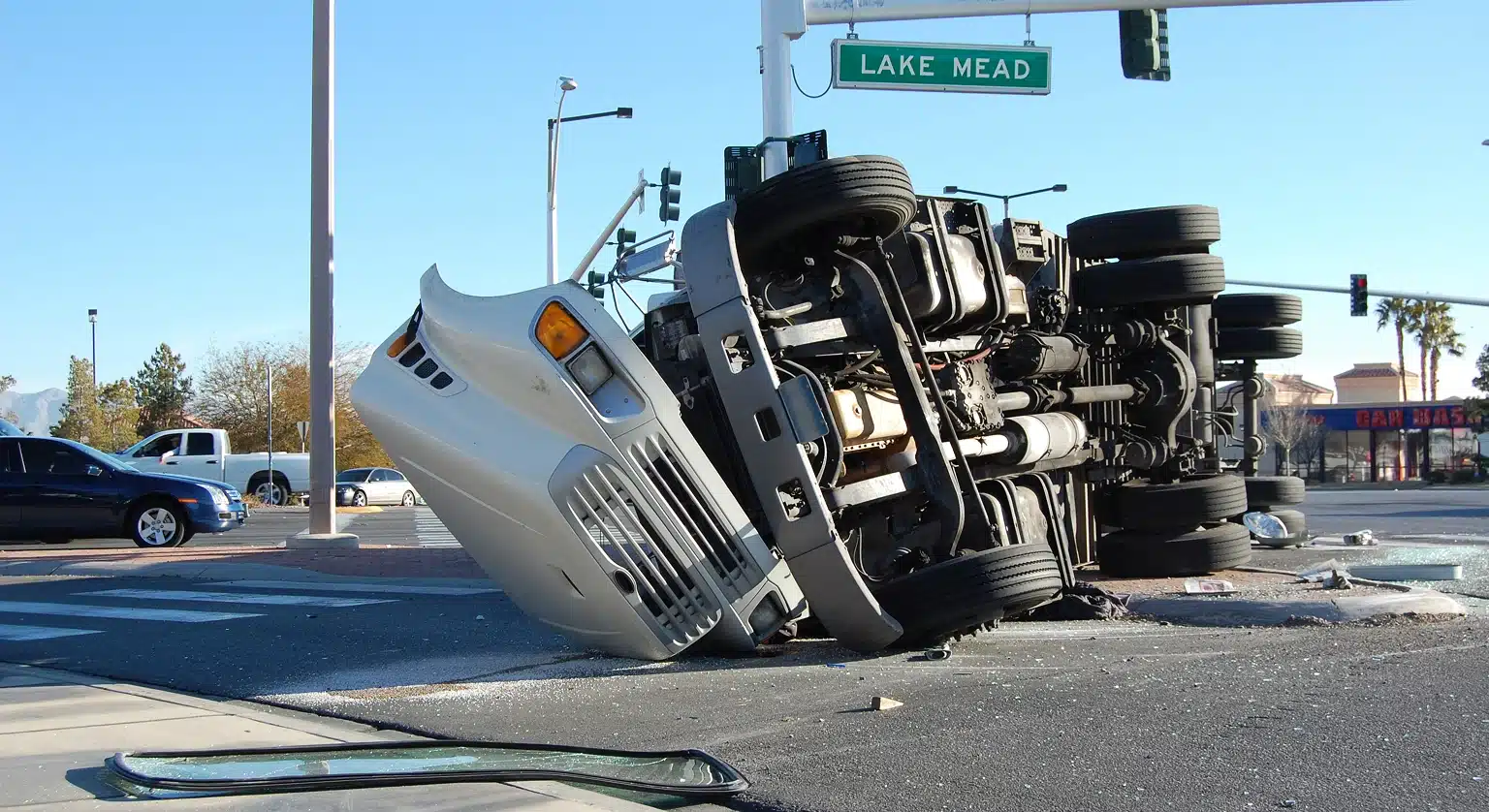
In a serious truck crash, responsibility often extends beyond the driver. Commercial trucking involves multiple parties, and any of them may share liability, including the trucking company, cargo shipper or loader, maintenance provider, truck or trailer owner, or parts manufacturer.
The challenge is tracing each party’s role in the crash. A driver may have violated a safety rule, a company may have failed to supervise or maintain its fleet, or improperly loaded cargo may have affected the truck’s stability. Crash-scene evidence, vehicle data, driver records, and company records can help establish what happened and who may be responsible.
Parties who may be responsible
Examining the driver’s conduct, the carrier’s practices, cargo handling, vehicle maintenance, equipment, and roadway conditions can help identify where responsibility lies.

The truck driver
A truck driver may be personally liable when negligent driving causes a collision. Conduct that may support driver liability includes:
- Driving while distracted or failing to maintain a proper lookout for other vehicles and roadway conditions
- Speeding
- Following other vehicles too closely
- Driving while impaired
- Falling asleep or driving while fatigued
- Violating applicable hours-of-service requirements
- Failing to properly operate or control the truck
If fatigue appears to be a factor in the crash, investigators may examine the driver’s electronic logging device (ELD) records. Federal regulations require motor carriers to retain these duty-status records for at least six months. This gives investigators a window to confirm whether the driver’s reported hours complied with Hours of Service regulations and whether fatigue was a factor in the crash.
The trucking company (motor carrier)
Under respondeat superior, an employer may be held responsible for an employee’s negligence when the employee was acting within the scope of employment. If a truck driver causes a crash while performing job duties, the motor carrier may share liability for the driver’s negligence. A carrier may also face direct liability for its own conduct, including:
- Negligent hiring – hiring a driver without properly checking qualifications, credentials, or safety history
- Negligent supervision – failing to monitor a driver’s conduct, hours, or performance
- Negligent entrustment – allowing an unqualified or unsafe driver to operate a truck
- Deadline pressure – encouraging drivers to skip required rest or falsify logs
Cargo loaders and shippers
Improperly loaded, unsecured, or overweight cargo can contribute to rollovers and jackknife crashes. Shifting cargo can change a truck’s center of gravity, especially during turns or sudden braking, making the vehicle harder to control. Federal regulations establish standards for securing cargo during transport and reducing the risk of movement that could affect the truck’s stability or handling.
Determining who was responsible for meeting those requirements can be important when investigating a crash. The company responsible for loading the trailer may be a separate entity, such as a warehouse, shipper, or third-party logistics provider that the driver may never have interacted with. Bills of lading, weight tickets, and loading records can help determine whether the cargo was properly loaded and secured and whether a loading error contributed to the crash.
Maintenance and repair contractors
Commercial trucks are subject to strict inspection, repair, and maintenance regulations. If a third-party shop performs inadequate repairs or fails to identify a safety defect such as faulty brakes, worn tires, or a defective coupling system, it may share liability if that failure was the cause of the crash. Maintenance invoices, inspection reports, repair records, and the truck’s maintenance history can help determine whether a contractor identified and properly addressed a safety issue before the collision.
Truck and parts manufacturers
Sometimes, a truck crash is caused by a defect in the equipment rather than driver or carrier negligence. Defective trucks, trailers, or components such as tires, brakes, or coupling systems can be a causal factor in a crash or increase the severity of resulting injuries. When this happens, the manufacturer or another party in the supply chain may face liability. Investigators may examine the failed component, maintenance records, inspection history, and recall information to determine whether a defect contributed to the crash.
Government entities
A state or local government agency may also bear responsibility for roadway conditions that are causal factors in a truck crash, such as missing signage, dangerous road design, or other hazards. Claims against government entities are subject to special rules and may have much shorter notice deadlines. Identifying a potential road defect early gives your attorney time to determine which deadlines and requirements apply.

Why multiple liable parties matter
Identifying every potentially liable party matters beyond the lawsuit itself. Each may carry separate insurance coverage, records, and legal defenses. Stopping the investigation at the driver can mean missing both key evidence and another potential source of compensation. Other parties may control critical documents, vehicle data, maintenance records, or cargo records that help establish liability. Understanding each party’s involvement early can give your attorney more time to preserve evidence, establish liability, and pursue all available sources of recovery.
How we build a case
At The Killino Firm, we move quickly to preserve technical evidence before routine data retention schedules can erase it. We may send a letter of spoliation to companies connected to the crash, formally notifying them to preserve potentially relevant records and electronic data. From there, we work with accident reconstruction experts, engineers, and medical specialists to build the evidence needed to support your claim, whether that means negotiating with insurers or taking the case to court.

Frequently asked questions
What if the truck was carrying hazardous materials?
Crashes involving hazardous materials can add contamination, cleanup, and exposure-related damages to the injuries and losses from the crash. They also involve additional federal requirements for loading, placarding, and driver training and certification. Violations of those requirements may provide evidence of negligence or help establish liability, depending on the circumstances.
Does it matter if the truck was leased rather than owned by the motor carrier?
Not necessarily. Trucking companies often lease trucks from separate owners or leasing companies, but the motor carrier operating the truck is generally still responsible for its regulatory compliance. Liability can extend to the leasing company too, depending on what the lease agreement says about maintenance. Investigators may review the lease and the truck’s maintenance records to determine which party was responsible for the vehicle’s condition and maintenance.
Can a freight broker be held liable for a truck accident?
Sometimes. A broker that arranges for a carrier to haul a shipment isn’t usually liable simply for booking the load. But a broker that knowingly hires a carrier with serious safety or qualification problems may face a negligent selection claim of its own.
What if the truck was driven by an independent contractor, not an employee?
A carrier’s liability depends on the actual working relationship, the control it exercised over the driver, and applicable federal and state rules, not simply how the driver was classified. Investigators may examine the contract, dispatch records, payment arrangements, and other evidence to determine how the relationship worked in practice.
Start your truck accident investigation now
When a commercial truck crash causes catastrophic injury or wrongful death, determining liability can require much more than reading a police report. The Killino Firm investigates the driver, trucking company, vehicle, maintenance history, cargo, electronic data, and other factors that may have contributed to the crash. Get in touch with our attorneys now for a free, confidential consultation.