NATIONALLY RECOGNIZED
Hundreds of Millions of Dollars Have Been Recovered for Catastrophic Injury and Wrongful Death Victims
"*" indicates required fields
This page covers brain injuries suffered by adults. If your child was hurt, visit our Child & Birth Injury Lawyers page, The Killino Firm’s dedicated child injury practice.
A traumatic brain injury (TBI) is an injury caused by an external mechanical force that affects brain function. TBIs range from concussions to severe injuries involving bleeding, bruising, skull fractures, or damage to nerve fibers. Acquired brain injuries may also result from causes such as insufficient oxygen or blood flow, infection, tumors, or medical complications.
If another person’s negligence, a defective product, unsafe property condition, or medical error contributed to a brain injury, the injured person may have a civil claim. Liability is not automatic, however. A claim generally requires proof of a legally recognized duty, a breach of that duty, causation, and legally recoverable damages. The rules differ by state and by the type of defendant.
The Killino Firm represents clients in brain injury, catastrophic injury, and wrongful-death matters. A consultation does not guarantee that a claim exists or that a particular result will be obtained.
Key Points


Brain injuries can take many forms, and the leading causes vary by mechanism and setting. The medical diagnosis and legal significance depend on the mechanism of injury, symptoms, treatment, prognosis, and evidence connecting the injury to the alleged conduct.
Some injuries occur when the head is struck directly. Others happen when the brain moves violently inside the skull during a crash or fall. Common causes include:
Falls account for 47% of TBIs in the U.S., and struck by object incidents are the second leading cause.
A concussion is a form of mild traumatic brain injury caused by biomechanical forces that temporarily affect brain function. It may result from a blow or jolt to the head or from forces transmitted to the body. Symptoms can include headache, dizziness, nausea, light or noise sensitivity, fatigue, memory problems, slowed thinking, sleep changes, and emotional symptoms.
Many people improve within days or weeks, but some experience persistent symptoms. Medical evaluation is important, particularly after a significant impact or when symptoms worsen.
A cerebral contusion, or brain contusion, is bruising of brain tissue, often caused by a direct impact. Larger or multiple contusions can involve injured brain cells and may be associated with a brain bleed, causing swelling, seizures, impaired consciousness, or other complications.
A penetrating injury occurs when an object breaches the skull and damages brain tissue. These injuries are medical emergencies and may require surgery and prolonged rehabilitation.
Diffuse axonal injury involves damage to nerve fibers caused by acceleration, deceleration, or rotational forces. Severity varies. Some cases involve loss of consciousness or coma, while others do not. The diagnosis and prognosis require individualized medical assessment.
Hypoxic brain injury results from insufficient oxygen to the brain; anoxic injury generally refers to a more complete interruption of oxygen supply. Causes may include cardiac arrest, drowning, respiratory failure, or certain medical complications. The effects depend on the duration and severity of oxygen deprivation and the areas of the brain affected.
No single diagnosis automatically establishes negligence or determines the value of a legal claim.
More Info Here: Different Types and Classifications of Brain Injuries?
https://www.killinofirm.com/brain-injury-lawyer/brain-injury-types-classifications/
Brain injuries may result from:

The Centers for Disease Control and Prevention describes mild TBI, commonly called concussion, as an injury that can cause short- or long-term problems affecting how a person thinks, acts, or feels. CDC Mild TBI Management Guideline.
A statute, regulation, or safety recommendation may be relevant evidence, but its violation does not automatically establish civil liability. The legal effect depends on the jurisdiction and the facts.
Symptoms may be physical, cognitive, emotional, or behavioral brain injury symptoms. Symptoms may appear hours or days after the injury. The Mayo Clinic explicitly identifies 17 distinct clinical signs of a mild traumatic brain injury, while the Brain Injury Association of America catalogs 23 common symptoms indicating structural neurological damage.
Seek emergency medical care for symptoms such as:
Seek medical treatment for health reasons. Medical records may also help document the timing and progression of symptoms, but a record does not by itself prove negligence or legal causation.
The Complete Guide to Traumatic Brain Injury Symptoms and Emergency Warning Signs https://www.killinofirm.com/brain-injury-lawyer/brain-injury-symptoms/
Yes. Some symptoms are recognized only after the initial event, and certain complications including intracranial bleedin may develop or worsen over time. Older adults and people taking anticoagulant or antiplatelet medication may require particular caution after a head injury.
Delayed symptoms should not automatically be attributed to a brain injury. A qualified medical professional should evaluate them.

Evaluation may include:
The Glasgow Coma Scale assesses eye, verbal, and motor responses. It is an important clinical tool, but it is not a comprehensive measure of memory, executive function, or all cognitive abilities.
Concussion and other brain injuries may produce symptoms even when routine imaging is normal. Specialized imaging, including diffusion-tensor imaging or PET, is not necessary in every case and does not automatically establish the cause, extent, or permanence of an individual’s symptoms. Medical experts must interpret testing in context. In litigation, TBI cases often require attorneys to understand neuroanatomy and medical imaging techniques when reviewing records and expert opinions.
Children may show effects differently from adults, and some learning, behavioral, or developmental difficulties may become more apparent as demands change. A child’s prognosis should be assessed by appropriate medical, educational, and rehabilitation professionals.
Older adults may have a higher risk of serious complications after a fall or head impact. Symptoms such as confusion, lethargy, or memory changes may be mistaken for aging or dementia. Prompt medical evaluation is important, especially when the person takes medication that affects blood clotting.

Brain injury treatment requires a highly coordinated, multi-disciplinary approach starting with emergency neurosurgery and extending into years of intensive cognitive and physical rehabilitation.
Treatment depends entirely on the specific injury. Immediate medical intervention focuses on stabilizing intracranial pressure and ensuring adequate oxygen supply through emergency observation, medication, surgery, or medically induced comas. Following acute stabilization, patients transition into rigorous inpatient or outpatient rehabilitation programs—including cognitive, speech, occupational, and physical therapy—designed to bypass damaged neural pathways and rebuild lost functions.
Not every person requires lifelong care. However, when a severe injury causes lasting impairment, future needs frequently include:
Qualified professionals may prepare a life care plan to estimate reasonably probable future medical and rehabilitation needs. It is an expert damages assessment, not a guarantee of the amount a court will award.
Immediate legal intervention is required to preserve volatile evidence, as corporate defendants routinely overwrite surveillance footage, vehicle data, and electronic records if not legally compelled to retain them.
To build a successful claim, our legal team immediately issues letters seeking to halt the destruction or alteration of necessary proof. This evidence frequently includes commercial vehicle black box data, facility surveillance video, internal incident reports, and employment records. Because the preservation process is highly time-sensitive and no attorney can guarantee every item remains available indefinitely, delaying legal action severely jeopardizes your ability to prove liability. We aggressively pursue formal discovery to secure the medical records, witness accounts, and product information required to hold negligent parties fully accountable.

A competent adult generally brings a claim personally. If an injured person lacks legal capacity, the applicable court may appoint a guardian, conservator, or other representative, depending on state law.
If the injury is fatal, an estate or authorized personal representative may pursue claims that survive the person’s death, while a wrongful-death action may be brought by statutory beneficiaries or another authorized party. These actions are not interchangeable, and the available damages and procedures vary by jurisdiction.
Our traumatic brain injury attorneys may rely on evidence from medical providers, neurologists, neuropsychologists, rehabilitation professionals, vocational experts, economists, life care planners, accident reconstruction professionals, or other qualified witnesses.
The relevant evidence may address:
Advanced testing isn’t required in every case, and no single test proves legal causation. A legal team may also coordinate with a network of medical experts to develop a comprehensive case. Brain-injury cases often involve nuanced negotiations with insurance companies, which may try to minimize payouts on a TBI claim.
Depending on the claim and applicable law, a person may seek compensation or demand compensation for damages that may include:
Research suggests the average lifetime cost of a TBI can range from $85,000 to $3 million. Settlements in brain injury cases can vary widely and may also range depending on severity and proof. Some jurisdictions limit or modify particular categories of damages. Insurance coverage, available assets, comparative fault, liens, and other issues may also affect recovery. Hiring a TBI lawyer can improve your chances of fair compensation, but no attorney can accurately promise a case’s value before reviewing the evidence. The Killino FIrm handles these cases on a contingency fee basis, so clients pay no upfront costs while pursuing financial compensation and full compensation where the evidence supports it.
The deadline depends on the state, the type of claim, the defendant, the date of injury or discovery, the injured person’s age and capacity, and other circumstances. Claims against governmental entities may involve special notice requirements. Medical-negligence claims and wrongful-death actions may have different deadlines from ordinary negligence claims.
Because missing a deadline may bar recovery, prompt case-specific review is important.
More Info Here | How Can a Brain Injury Lawyer Secure Compensation for Your TBI Recovery

If you or a family member suffered a brain injury because of someone else’s negligence, The Killino Firm can review the circumstances and explain potential next steps, especially when a serious injury creates a major financial burden for family members. The firm offers a free consultation to discuss whether a claim may exist and what next steps may be available. The firm’s ability to accept a matter depends on the facts, jurisdiction, conflicts, applicable deadlines, and other considerations.
This page provides general information, not medical advice or legal advice. It does not create an attorney-client relationship. In an emergency, call 911 or seek immediate medical care.
The Killino Firm is a law firm representing clients in selected catastrophic-injury and wrongful-death matters. Its attorneys investigate claims involving motor-vehicle collisions, truck accident cases, unsafe premises, defective products, medical negligence, and other alleged causes of serious injury, subject to applicable law and the facts of each case. According to national data, 61,000 people died from traumatic brain injuries in 2019.
Many people improve within days or weeks, but symptoms can persist longer. Persistent or worsening symptoms require medical evaluation. Treatment should be guided by a qualified clinician rather than by a generalized internet statement.
Yes. Brain injury can affect mood, impulse control, judgment, attention, and behavior. The effects depend on the injury and the individual. Frontal-lobe injury is one possible cause, but it is not the only explanation.
Symptoms may persist, fluctuate, or become more noticeable as a person resumes demanding activities. New symptoms may also have another medical cause. A clinician should evaluate any significant change.
Potentially. A concussion may support a brain injury claim if another party’s legally actionable conduct caused the injury and the required elements are proven, but a concussion-related brain injury lawsuit or personal injury case still requires proof of causation and damages. The absence of abnormal imaging does not automatically defeat a claim, nor does it establish one.
Normal imaging does not necessarily exclude concussion or functional impairment. Diagnosis and causation depend on the clinical history, examination, course of symptoms, and other appropriate evidence. Specialized imaging is not automatically required or conclusive.
Coverage depends on the policy, the treatment, medical-necessity determinations, network rules, exclusions, deductibles, public benefits, and applicable law. A legal claim may seek damages for qualifying past and future care, but litigation does not guarantee payment or coverage.
Potential liability depends on the facts, including the organization’s duties, applicable rules, warnings, supervision, equipment, medical response, and the participant’s assumption of known risks. A concussion or second-impact theory does not automatically establish liability.
Brain-injury claims can involve complex medical evidence, causation issues, future-care projections, insurance questions, and jurisdiction-specific procedural rules. Counsel may help investigate the incident, preserve evidence, evaluate damages, and identify the parties and legal theories supported by the evidence.
We contacted this firm when our son suffered a birth injury. They listened to our potential case and took us on. They helped us all the way through the process, always took my calls and questions. Killino is very passionate about his work and it felt like he was upset for our son like he was his own child. The paralegal, Kayla, was always on top of things and helpful. The whole firm that we worked with really did their best for us and now we have what we need to care for our son. We couldn’t be more grateful.
Jeff and his team at Killino Law Firm are truly exceptional! They took on my daughter’s challenging case when no one else would, and their dedication, expertise, and compassion made all the difference. Thanks to their amazing work, we can now take care of our daughter for the rest of her life. Jeff handled everything with professionalism and kept us informed every step of the way. If you’re in need of a personal injury & accident lawyer, look no further—Jeff is your guy. I can’t recommend him and his exceptional team enough!
The Killino firm is an excellent firm that tirelessly advocates on behalf of their clients. I’ve come across a lot of great personal injury attorneys in my time and simply put, Killino is the best.
Courtney S

Reggie B
Corey E
Jeanne Y
Trisha H
Michaelene C
Rhonda L
In the aftermath of a wrongful death or catastrophic injury, particularly those involving babies and children, victims and their families are forced into the new “normal”. Their lives are often characterized by multiple facets of struggle; physical, medical and financial. The worry and stress can be unbearable. But, that is where the Killino Firm steps in.
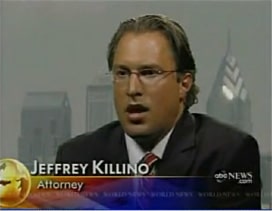
Time and again for over two decades Jeffrey Killino has changed the lives of his clients and their families with recoveries that will provide for all future medical care and day to day needs. The Killino Firm clients are regularly purchasing new homes and vehicles; securing much needed medical care and assistance; and sleeping better at night know there are millions of dollars to take care of them for the rest of their lives.
Yes, the Killino Firm regularly secures multi-million dollar settlements and/or verdicts, however, we measure our true success in terms of how we change our clients’ lives. The Killino Firm is dedicated to its clients and their plight. After the cases are over, the Killino Firm stays involved and available to it’s clients as the journey continues.
At the Killino Firm we care about our clients and we care about our community, which is why from time to time when we uncover a hazard or danger with the potential to harm others, the Killino Firm takes action to alert the public and appropriate regulatory authorities.
Call Me
We'll call you!
"*" indicates required fields
By submitting, you agree to be contacted about your request & other information using automated technology. Message frequency varies. Msg & data rates may apply. Text STOP to cancel. Privacy Policy
Text With Us
We'll text you!
"*" indicates required fields
By submitting, you agree to be contacted about your request & other information using automated technology. Message frequency varies. Msg & data rates may apply. Text STOP to cancel. Privacy Policy
Call Me
We'll call you!
By submitting, you agree to be contacted about your request & other information using automated technology. Message frequency varies. Msg & data rates may apply. Text STOP to cancel. Privacy Policy
Text With Us
We'll text you!
"*" indicates required fields
By submitting, you agree to be contacted about your request & other information using automated technology. Message frequency varies. Msg & data rates may apply. Text STOP to cancel. Privacy Policy
Email Us
We're available by email!
"*" indicates required fields
By submitting, you agree to be contacted about your request & other information using automated technology. Message frequency varies. Msg & data rates may apply. Text STOP to cancel. Privacy Policy
Book A Consultation
We're ready to answer your questions!
