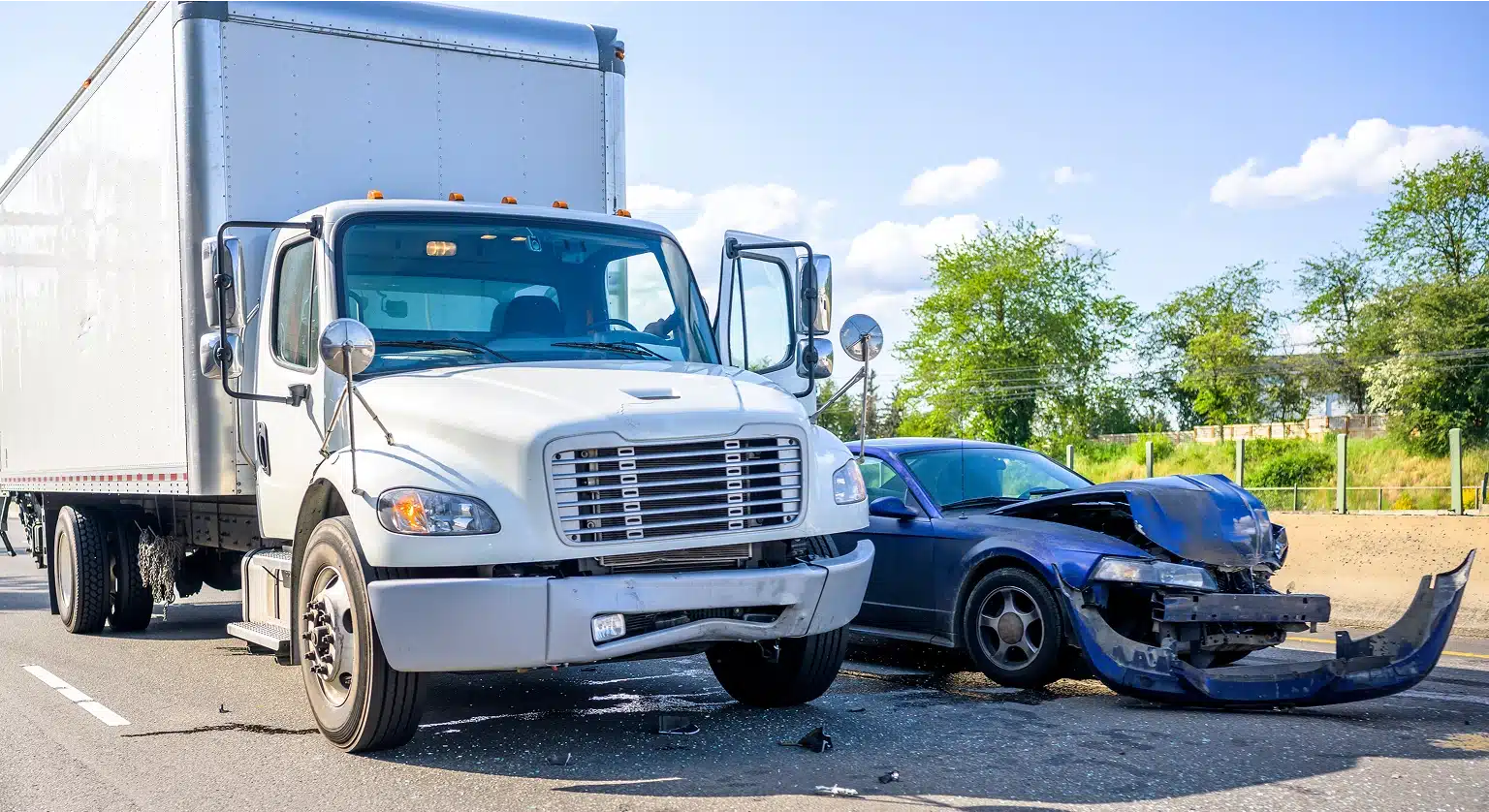
A truck accident lawsuit and a car accident lawsuit are based on the same basic questions: Who was negligent? Did that negligence cause the crash? What injuries and losses resulted?
The difference is that a commercial truck crash can add layers of regulatory requirements, commercial records, insurance issues, technical analysis, and long-term damages that are less likely to arise in an ordinary passenger-vehicle case. These differences can affect how a claim is investigated, evaluated, negotiated, and, if necessary, taken to court.
Key differences between truck and car accident lawsuits
While both types of cases involve establishing fault and damages, truck accident claims can involve a different set of considerations as the case progresses.
Federal regulations come into play
A passenger-vehicle crash is generally governed by state traffic and negligence laws. When a commercial truck is involved, however, the investigation may also involve federal regulations governing how motor carriers and truck drivers operate. These rules can provide another basis for evaluating whether a driver or trucking company failed to meet its legal obligations.
The Federal Motor Carrier Safety Regulations (FMCSR), found in Title 49 of the Code of Federal Regulations, address driver hours, vehicle maintenance, driver qualifications, cargo securement, and electronic logging.
Federal rules generally require motor carriers to retain records of duty status and supporting documents for at least six months. Those records can provide important evidence when investigators examine whether a driver’s hours complied with applicable Hours of Service requirements.

The evidence can be much more technical
A car accident investigation may rely heavily on police reports, photos, and witness statements. An accident involving a truck can require a broader and more technical record, including the onboard performance data from the truck’s own systems, the carrier’s hiring and training files, weight or loading documentation from the shipper, and other commercial records. (Our companion guide, “What Evidence Is Needed to Prove a Truck Accident Claim,” breaks these down in full.)
Some of this evidence may be overwritten or subject to routine retention policies, making early preservation important. An attorney may send a formal letter of spoliation early in the case to put relevant parties on notice to preserve potentially important records and data.
The injuries are often more severe
Commercial trucks are substantially heavier and larger than passenger vehicles, making collisions more likely to cause serious or permanent injuries such as traumatic brain and spinal injuries or multiple fractures. These injuries can mean higher medical expenses, longer recoveries, lost income, and long-term care needs, making damages more complex to evaluate than in a typical car accident claim.
Insurance issues can be more complicated
Commercial trucking operations carry significantly higher liability coverage than an individual driver’s policy. That means more money is available, but it also means negotiating against professional claims adjusters and defense teams whose full-time job is minimizing what your case is worth. Trucking companies often dispatch investigators to the scene within hours, long before an unrepresented victim thinks to call an attorney. This allows them to begin gathering evidence and evaluating liability while an unrepresented victim may not yet realize how important that evidence could be.
The legal process can cross state lines
Truck litigation can involve more than one state. If a crash occurs in one state while the motor carrier, driver, or other responsible company is based in another, questions of jurisdiction, venue, and which state’s laws apply can become important. Those issues may affect deadlines, available remedies, and where the lawsuit can be filed. When a case involves multiple states, an attorney must evaluate those issues early to determine where the claim can be pursued and which laws may apply.

What you can expect as the client
Your attorney will handle the legal work, but you will need to provide information that helps build the case. This may include medical records, information about your work and income, and details about how your injuries have affected your daily life. That information helps document the losses you are claiming.
If the case moves into litigation, you may also need to answer written questions, provide documents, or give a deposition. A deposition is a formal question-and-answer session in which you give testimony under oath. Your attorney will prepare you beforehand and explain what to expect.
Throughout the case, keep your attorney informed about significant changes in your condition, treatment, work, or other circumstances that may affect your claim. Promptly providing requested information and following your medical providers’ recommendations can help ensure the case record accurately reflects your injuries and losses.

Frequently asked questions
Do I need a lawyer who specializes in truck accidents, or will any personal injury lawyer do?
General personal injury experience can be valuable, but truck accident cases may require additional knowledge of FMCSR regulations, electronic truck data, commercial records, and trucking industry practices. An attorney experienced with commercial vehicle accidents can recognize these issues and investigate the additional parties, evidence, and regulations that may affect the claim.
Is the statute of limitations different for truck accidents?
The deadline for filing a personal injury lawsuit generally depends on the same state statutes that apply to other injury claims, but exceptions can apply depending on the parties and claims involved. Evidence may need to be preserved much earlier, however, because some records are subject to retention policies or can become harder to obtain over time.
Why does black box data matter so much?
Black box data can provide an objective record of the truck’s operation before and during a crash. Depending on the vehicle and system, the data may capture information such as speed, braking, throttle input, and other vehicle performance details, giving investigators evidence that doesn’t depend solely on the accounts of the people involved.
Are damages calculated differently in a truck case than a car accident case?
The basic categories of damages are similar, including medical expenses, lost income, and pain and suffering. But when a truck crash causes serious or permanent injuries, the claim may involve substantial future medical care, reduced earning capacity, rehabilitation, and other long-term losses that may be less significant in a minor car accident.
Talk to a truck accident lawyer today
Truck accident cases can require a broader investigation than an ordinary car accident claim. The Killino Firm brings the regulatory knowledge, investigative resources, and trial experience these cases require. Contact us now to book a consultation.