A wrongful death lawsuit is a civil action brought against an individual, manufacturer, or corporate entity whose negligence, recklessness, or intentional misconduct directly caused the death of another person. It may occur when the deceased individual would have possessed the legal grounds to pursue a personal injury claim had they survived the fatal incident. For parents or guardians who have lost an infant or child because of medical malpractice, a defective product, or other negligence, this legal claim may provide a path to hold the responsible party accountable and recover compensation for financial and emotional losses. Learn about the core legal principles governing wrongful death claims, including who can take legal action, available damages, and the required elements of negligence. This overview also explores procedural factors—such as statutory filing deadlines and comparative fault—as well as rules surrounding survival actions, medical malpractice, and product liability.
Key Takeaways for Families
Take your time deciding whether filing this claim is the right choice for your family. These cases are emotionally difficult and can be legally complex, and wrongful death law varies by state, including who may file and what damages are available. Our attorneys can evaluate your situation, explain the applicable statute, and help you understand what steps to take next.
Statutory Right: Wrongful death claims are governed by state statutes that define who can sue and what damages can be recovered.
Dual Claims: Families often file a wrongful death claim alongside a survival action to maximize corporate accountability.
Economic Expertise: Proving full financial loss often requires forensic economists to calculate the exact present value of lost lifetime earning capacity and benefits.
Burden of Proof: Plaintiffs must prove negligence by a preponderance of the evidence, often requiring accident reconstruction and biomechanical engineering.
Time Limitations: Strict statutes of limitations exist nationwide, which can permanently bar claims if filed too late.
What exactly constitutes a wrongful death claim?
While governed by specific state statutes across the country, a wrongful death generally constitutes a fatality directly resulting from the legally actionable negligence, default, or breach of duty by a third party, with negligence being the most common basis for these claims. At its core, a wrongful death claim requires establishing that the defendant’s wrongful act, neglect, or intentional conduct directly caused the death.
When a fatal accident shatters a family, not all deaths qualify for a claim; to proceed, a case must involve someone else’s negligence or misconduct. Our catastrophic injury legal team at The Killino Firm approaches these cases by securing physical evidence and identifying all liable parties. We evaluate the chain of events to determine how the death occurred and to identify all responsible parties.
Wrongful death actions frequently arise from:
Workplace injuries
For example, a car accident is one of the most common fatal accidents behind many wrongful death claims, and if a heavy truck manufacturer fails to install standard safety technology, resulting in a fatal underride crash, that safety failure may directly form the legal basis for a wrongful death lawsuit. According to data from the National Highway Traffic Safety Administration (NHTSA), tens of thousands of lives are lost annually in preventable traffic crashes, many of which meet the strict criteria for wrongful death litigation under state law.

How does a wrongful death claim differ from a survival action?
A wrongful death claim compensates the surviving family members for their direct financial and, in some instances, emotional losses, whereas a survival action compensates the decedent’s estate for the suffering and losses the victim experienced between the time of injury and the time of death. Both claims are separate but are typically filed together to ensure comprehensive accountability.
Understanding the legal mechanics separating these two causes of action changes how damages are pursued:
Wrongful Death Claim: Focuses exclusively on the harm suffered by the statutory beneficiaries. Statutory beneficiaries are individuals designated by state law (statute) who have the legal right to receive compensation or benefits in specific legal actions. Economic damages compensate for quantifiable financial losses, such as medical expenses, funeral and burial costs, and the financial support a deceased loved one would have provided; survivors may also recover the deceased’s lost income or future wages. Non-economic damages cover harder-to-measure losses, such as loss of companionship and the deceased’s pain and suffering—though whether emotional distress is recoverable depends on state law.
Survival Action: If a victim survived in a hospital burn unit for three weeks following a defective product explosion before succumbing to their injuries, the survival action claims damages for those three weeks of pre-death conscious pain and suffering, as well as incurred medical bills.
Our team of accident lawyers meticulously drafts complaints that leverage both doctrines. The distinction matters during the distribution of settlement funds, as survival action damages pass through the deceased’s estate and may be subject to different tax and debt collection rules than wrongful death proceeds paid directly to dependents.
Who is legally permitted to file a wrongful death lawsuit?
See our blog on “How are wrongful death settlements divided among family members?”
How are wrongful death settlements divided among family members?
Only certain parties may bring a wrongful death lawsuit, typically surviving family members or the estate representative, and the right to file wrongful death claims is strictly dictated by state statutes, granting primary filing rights to the deceased’s immediate family, including surviving spouses, children, and sometimes parents. If no immediate family members exist, secondary financial dependents or the appointed personal representative of the estate may initiate the litigation in some states.
Because this is a nationwide legal issue, the hierarchy of beneficiaries varies by jurisdiction; the beneficiaries may include
Immediate Family: Spouses and biological or adopted children possess the most unassailable right to file.
Parents & Legal Guardians: In cases involving unmarried adults or minors, parents typically hold the right to sue. Where state law allows, legal guardians may also file on behalf of deceased minors or incapacitated adults.
Financial Dependents: Certain jurisdictions may allow extended family members, unmarried partners, putative spouses, common-law spouses, and others who were financially dependent on the deceased to file, provided they can prove absolute financial dependence on the deceased.
The Estate: Some states mandate that the personal representative or executor of the estate file the claim on behalf of all beneficiaries, and that representative is often the plaintiff, distributing the recovered funds according to a predefined statutory formula.
What damages can be recovered in a wrongful death claim?
Wrongful death damages are generally divided into economic losses, which represent measurable financial deprivation, and non-economic losses, which compensate for the destruction of the familial relationship. The value of damages depends on all the circumstances of the case and should reflect the proper amount of compensation under the facts presented. In cases of extreme corporate recklessness, courts may also award punitive damages designed to punish the wrongdoer and deter future misconduct in some states.
The legal system cannot bring back a lost loved one, but it can force negligent actors to shoulder the financial devastation they cause.
Economic Damages: Require precise calculation. Through the wrongful death claim, families are entitled to reimbursement for funeral expenses, loss of expected financial support, and lost income, as well as loss of expected inheritance. (Pre-death medical expenses and lost wages between injury and death are recovered through the separate survival action).
Non-Economic Damages: Compensate the spouse for loss of consortium and companionship and the children for the loss of parental guidance, nurturing, and instruction, and may also include mental anguish. Depending on state law, emotional trauma suffered by specific family members may also be recoverable.
Punitive Damages: When a corporation intentionally ignores safety regulations—such as a trucking company forcing drivers to violate Federal Motor Carrier Safety Administration (FMCSA) hours-of-service rules—punitive damages may become a central demand, though only some states allow them for extreme negligence, willful acts, or intentional harm. Some states impose statutory caps on punitive damages—often expressed as a flat dollar amount, a multiple of compensatory damages, or whichever of the two is greater—so the maximum available award depends heavily on where the case is filed.
See our blog on “Hours of Service Violations: How Trucker Fatigue Causes Deadly Accidents”
Trucker Fatigue & Hours of Service Violations
How do forensic economists calculate the loss of future earnings?
Forensic economists calculate the loss of future earnings by analyzing the deceased’s age, earning capacity, historical tax records, educational background, and life expectancy to project lifetime income, which is then reduced to present value. They also factor in inflation, lost benefits like pensions and health insurance, and the replacement cost of household services, and expert witnesses such as forensic economists help determine the proper financial valuation of these losses.
This is a highly intellectual phase of litigation. Our catastrophic injury legal team partners with elite economists to build financial models. A generic estimate is legally insufficient. The economist will:
Establish the Base Earning Capacity: Review W-2s, tax returns, and industry standards to determine the decedent’s earning trajectory.
Project Fringe Benefits: Add the lost value of employer-matched 401(k) contributions, union pensions, and healthcare premiums.
Calculate Household Services: Quantify the monetary value of the work the deceased performed around the home, from childcare to home maintenance.
Reduce to Present Value: Apply complex discount rates to determine the exact lump sum needed today to replace a lifetime of missing paychecks.
See our Blog on “How does a forensic economist calculate lost earning capacity?”
How Forensic Economists Calculate Lost Earnings

What evidence is required to prove negligence in a fatal accident?
Proving negligence in a fatal accident requires establishing four key elements—often using evidence such as physical proof, expert testimony, digital data, or eyewitness accounts—to hold the responsible party liable when a fatal injury occurs. The plaintiff must show that the defendant owed a duty of care, breached that duty, and that the breach directly and proximately caused the person’s death and resulting damages.
Corporations do not admit fault voluntarily; they often hide behind aggressive defense tactics. Beating them requires an overwhelming evidentiary record that supports a valid wrongful death case.
Preserving Evidence: We make every effort to secure accident scene evidence before it is destroyed. In vehicular homicide cases, we immediately download the vehicle’s Event Data Recorder (EDR) to analyze pre-crash speed, braking patterns, and steering angles.
Biomechanical Reconstruction: When dealing with complex collisions or defective products, biomechanical reconstruction may be necessary. Biomechanical engineers analyze the kinetic energy of the impact and map it against human tissue tolerance to prove exactly how the fatal force occurred.
Corporate Depositions: We often depose corporate safety directors to expose systemic failures.
According to the Centers for Disease Control and Prevention (CDC), unintentional injuries are a leading cause of death in the United States, and exposing the negligence behind these statistics requires relentless, aggressive discovery by seasoned trial lawyers. If you lost a family member to corporate negligence, contact The Killino Firm for an immediate investigation.
How do statutes of limitations impact wrongful death claims nationwide?
Statutes of limitations dictate the strict legal deadline by which a wrongful death lawsuit must be filed in civil court, making timely filing essential before the family’s right to seek compensation is permanently extinguished. While some jurisdictions enforce a two-year statute of limitations starting from the date of death, time limits can range from one to three years (Sometimes longer) depending on state law and the nature of the defendant.
Missing a filing deadline may destroy the claim entirely, regardless of the strength of the evidence. Our team of accident lawyers strictly monitors these deadlines, ensuring timely filing under state-specific rules.
The Discovery Rule: In some medical malpractice or toxic exposure cases, the clock may not begin ticking until the cause of death is definitively linked to the defendant’s actions.
Government Entities: If the negligent party is a government agency (such as a city transit authority), the time limit to file a formal notice of claim is often drastically shorter, sometimes mere months, and missing it may forfeit the family’s ability to seek justice.
Tolling for Minors: While some states “toll” or pause the statute of limitations for minor children until they reach the age of majority, wrongful death statutes often require the claim to be filed within the standard timeframe by a legal guardian.
How is comparative fault handled in wrongful death litigation?
Comparative fault laws determine how damages are awarded if the deceased victim is found to be partially responsible for the accident that caused their death. Depending on the state, the family’s financial recovery will be reduced by the victim’s percentage of fault, or barred entirely if the victim’s fault exceeds a specific legal threshold.
Defense attorneys aggressively attempt to blame the victim to protect corporate bottom lines. We fight back against these tactics. The application of comparative fault varies dramatically nationwide:
Pure Comparative Negligence: Some states allow families to recover damages even if the deceased was 99% at fault, though the financial award is reduced by that 99%.
Modified Comparative Negligence: Some jurisdictions follow a 50% or 51% rule. If a jury determines the deceased was more than 50% responsible for the fatal incident, the family recovers nothing.
Contributory Negligence: A small minority of states follow a strict rule where even 1% fault assigned to the deceased can completely bar any financial recovery.

10 Frequently Asked Questions About Wrongful Death Lawsuits
1. Can a wrongful death lawsuit be filed if there is also a pending criminal case?
While a civil wrongful death lawsuit is separate from criminal proceedings—such as homicide or manslaughter—how independently the civil case moves forward varies by state and case type, especially if criminal charges are pending. Because civil cases require a lower burden of proof (preponderance of the evidence) than criminal cases (beyond a reasonable doubt), a family can win a civil lawsuit even if the defendant is acquitted in criminal court.
2. What happens if the deceased person signed a liability waiver before the fatal incident?
A liability waiver does not automatically shield a defendant from a wrongful death lawsuit. How a waiver is treated depends heavily on state law and the specific circumstances of the case. While some states allow waivers for ordinary negligence, courts widely refuse to enforce them against gross negligence, intentional misconduct, or statutory safety violations. Additionally, in many jurisdictions, a waiver signed by the deceased may not bind surviving family members pursuing their own independent statutory wrongful death claim.
3. How is the distribution of the settlement funds determined among multiple surviving family members?
Settlement distribution is typically determined by state intestacy laws or the specific wrongful death statute of the jurisdiction. If part of the recovery belongs to the decedent’s estate (via a survival action) rather than individual beneficiaries, allocation may differ. If family members cannot agree on the allocation, it is usually up to a judge and jury to divide the funds based on each beneficiary’s demonstrated financial and emotional loss.
4. Can you sue a hospital for wrongful death if a surgical error caused the fatality?
Yes, you can file a medical malpractice wrongful death claim against a hospital and its staff if the standard of medical care was breached. Our medical malpractice | birth injury team at The Killino Firm pursues facilities that fail to execute proper protocols during critical surgical or obstetric events.
5. Does a wrongful death claim cover the debts left behind by the deceased?
Wrongful death compensation paid directly to statutory beneficiaries is usually protected from the deceased’s creditors. However, funds awarded through a survival action for pre-death medical bills become part of the estate and may be subject to debt collection.
6. Can a wrongful death suit be filed over a defective consumer product that caused a fatal illness years later?
It is possible, but timing rules can be complex. While many jurisdictions toll the statute of limitations until the fatal illness is discovered and linked to the product, statutes of repose in certain states place an absolute cutoff on claims based on when the product was made or purchased—potentially barring lawsuits for older products even if the harm only surfaced years later.
7. What role does the National Transportation Safety Board (NTSB) play in aviation or train wrongful death claims?
The NTSB investigates transit disasters to determine cause and improve safety, but its findings cannot directly decide civil liability. By federal law (49 U.S.C. § 1154(b)), the NTSB’s formal accident report and probable cause conclusions are excluded from trial. While the agency’s ultimate opinions cannot be admitted as evidence, plaintiffs can often utilize the underlying factual evidence and technical documentation collected during the investigation. This can also vary by state.
8. Are siblings legally allowed to sue for the wrongful death of a brother or sister?
In most states, siblings cannot file a wrongful death claim if the deceased has a surviving spouse, child, or parent. Siblings are usually granted standing to sue only if there are no primary beneficiaries, and in many jurisdictions, they must also prove a distinct financial reliance on the deceased.
9. How long does a wrongful death lawsuit take to reach a final resolution? The timeline for a wrongful death lawsuit varies significantly from case to case, as there is no fixed timeframe for resolving complex litigation. The duration depends heavily on several factors, including the depth of expert discovery required, the defense’s willingness to reach a fair settlement, and the congestion of the court’s trial docket. The legal process typically moves through several critical phases—from initial investigation and evidence preservation to formal discovery, pre-trial negotiations, mediation, and trial preparation. While navigating these proceedings can be emotionally challenging, thorough preparation is essential to protect the family’s rights and secure full financial accountability. If you need immediate legal guidance, contact our team at The Killino Firm for a free evaluation.
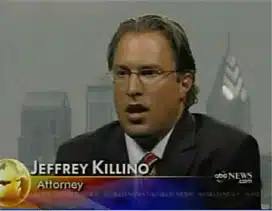
About The Killino Firm: The Killino Firm is a fiercely protective, nationwide legal practice dedicated to holding negligent corporations, manufacturers, and individuals accountable for catastrophic injuries and fatalities. Our catastrophic injury legal team includes experienced personal injury lawyers, leverages elite forensic resources, aggressive discovery tactics, and decades of trial experience to secure maximum financial justice for grieving families. We refuse to let corporations prioritize profit over human life, relentlessly pursuing the truth in complex wrongful death litigation from coast to coast as wrongful death attorneys.