A catastrophic injury lawyer represents people and families after a serious accident, identifies who may be legally responsible, preserves evidence, and pursues claims when catastrophic harm involves one or more individuals, businesses, product-related entities, property controllers, or government bodies. If you are trying to understand who can be held liable for a life-changing injury and what it takes to recover compensation, this guide explains how responsibility is determined under different facts and different laws.
Depending on the facts and the applicable law, responsibility for a serious accident may rest with one or more parties. Potential claims may be based on negligence, product liability, statute, or a party’s responsibility for another person’s conduct. The available claims, required proof, expert analysis, deadlines, procedural rules, and potential defendants vary by jurisdiction and case, including issues such as government immunity and vicarious liability—details that can directly affect whether evidence is preserved in time and whether a claim can move forward.

Liability depends on the legal claims available and the evidence supporting them. In a negligence claim, the issues commonly include whether the defendant had a legal obligation to exercise reasonable care, owed a duty of care, breached that duty, and legally caused harm for which damages may be recovered. Personal injury claims are one type of civil claim arising from another party’s negligent or wrongful conduct. Comparative negligence assigns fault percentages to the parties involved and, depending on the jurisdiction, may affect damages. Other claims, including product-liability claims, may have different requirements.
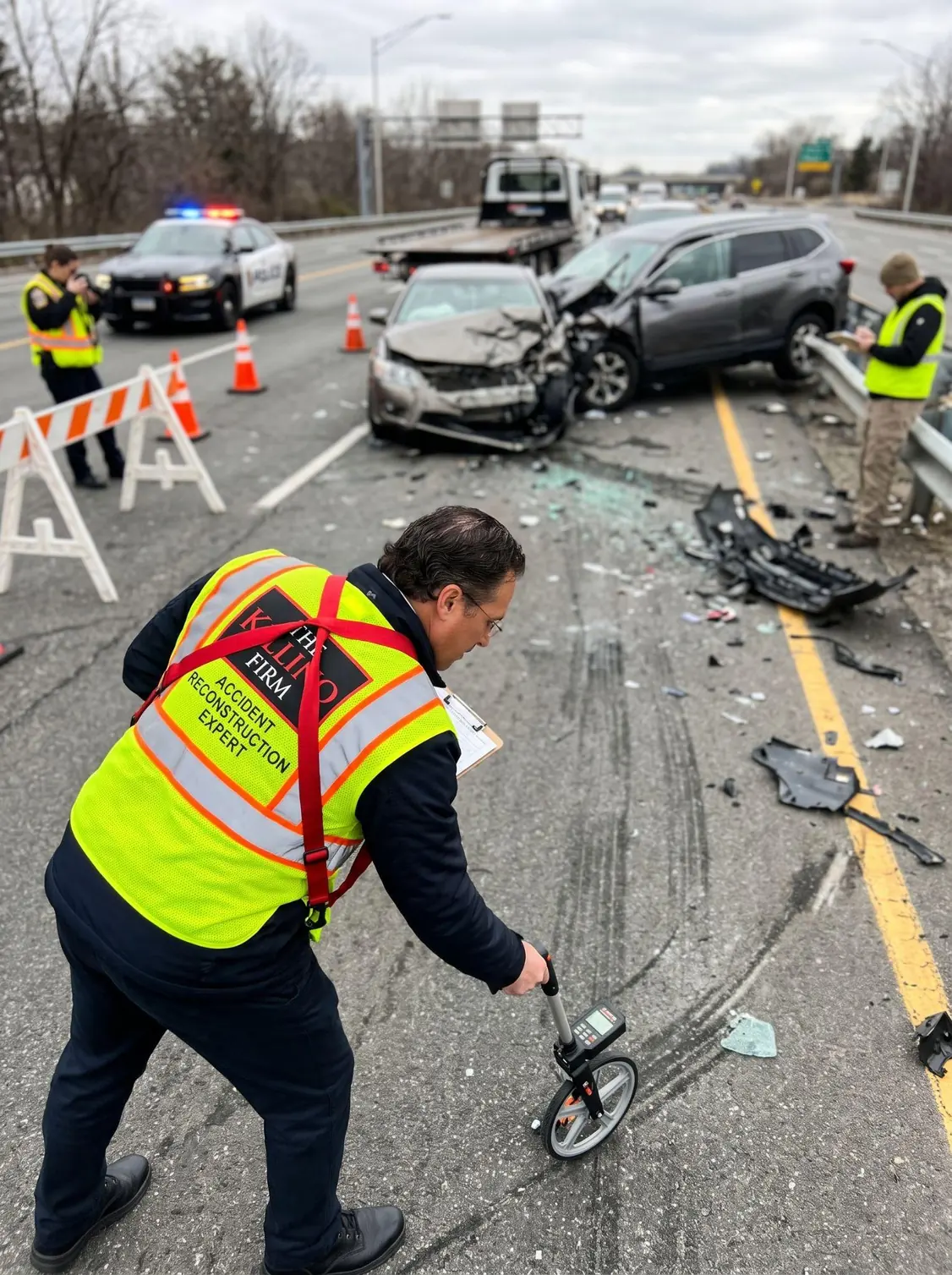
An investigation may examine the incident’s mechanical, human, and operational circumstances. Depending on the accident, potentially relevant evidence may include vehicle or equipment data, electronic logging device records, maintenance and training records, communications, photographs, video, medical records, and witness statements. Parties may need this evidence to support their claims. Some records may be lost or overwritten, so timely preservation efforts may matter. Preservation duties and appropriate steps depend on the circumstances.
Potentially responsible parties may include:

A company’s use of an independent contractor does not, by itself, resolve whether the company may be liable. The answer depends on the parties' relationship, the company’s conduct, the work performed, and the jurisdiction's law.
Depending on the circumstances and applicable law, issues may include:

These are fact-specific issues. A company’s safety requirements or operational directions may be relevant because businesses have a duty of care to operate reasonably, but that does not automatically establish an employment relationship or make them liable for a contractor’s conduct. Nor does the nature of an activity, standing alone, establish that a company is liable for a contractor’s conduct.
Records such as contracts, safety policies, maintenance files, training records, and communications may help explain the parties’ roles and responsibilities in litigation. Federal Motor Carrier Safety Administration information may also be relevant in some transportation matters, but its significance depends on the evidence and governing law.

Qualified experts and expert witnesses may help interpret physical evidence, vehicle data, and injury records. Depending on the case, accident-reconstruction or engineering analysis may examine vehicle damage, braking evidence, vehicle movement, or other physical measurements. Medical and biomechanical experts may address whether and how the forces involved could have caused or contributed to particular injuries. Our lawyers may also use advanced trial and forensic technology to present this evidence in court.
Expert analysis is not conclusive merely because it uses scientific methods or calculations. The reliability of the data, methods, assumptions, and opinions, as well as the applicable rules for expert evidence, may affect whether a court admits an opinion and how much weight it gives. Government research and crash data may provide background information, but they do not establish what happened in a particular collision.
A claim involving a public road, public agency, or government employee may be subject to special rules. Governmental immunity, statutory exceptions, required claim notices, filing deadlines, and proof requirements vary by jurisdiction and by the type of claim. In catastrophic cases, available coverage under standard insurance policies may be exceeded, which can affect how the claim is investigated and pursued.
Not every serious crash stems from a roadway defect; for example, negligent driving causes thousands of accidents each year, and distracted driving can significantly increase crash risk.
Depending on the applicable law, a roadway claim may involve questions about the condition of the road, the agency’s responsibility for it, notice of the condition, causation, and any applicable immunity or statutory defense. Do not assume every government entity has the same maintenance duty or that notice of a hazard is always required in the same way.
Relevant records may include roadway plans, inspection and maintenance records, prior complaints, and crash reports. Their availability and significance depend on the particular claim.

No single deadline applies to all accident claims. The applicable limitation period may depend on the jurisdiction, type of claim, defendant, date the claim accrued, and any applicable tolling rule, and missing the deadline may prevent an injured party from filing suit or seeking compensation. Because personal injury law varies by jurisdiction, many states also address deadlines and procedures by statute. Claims against government entities may require an administrative notice or claim before a lawsuit can be filed, sometimes on a shorter timetable. The specific requirements should be checked promptly.
They may. Under comparative negligence or similar fault-allocation rules, courts may divide responsibility by percentage among multiple parties, though the rules differ by jurisdiction and may vary by claim. In some circumstances, each party’s percentage of fault may reduce the compensation available to the claimant, or recovery may be barred, depending on the jurisdiction.
Depending on the allegations, relevant evidence may include safety and maintenance records, training materials, contracts, communications, inspection records, and electronic data; in some lawsuits against companies, it may also relate to supervision failures, unsafe practices, or ignored risks. Those issues may arise under a corporate-negligence legal doctrine distinct from a claim against an individual alone. No category of evidence automatically establishes liability; its relevance depends on the legal claim and facts.
Medical providers, life-care planners, economists, or other qualified experts may assess anticipated treatment, rehabilitation, equipment, home modifications, or personal care needs when evaluating future care in serious personal injury cases involving catastrophic injuries that result in permanent disability or long-term medical care. Any projected cost must be supported by appropriate evidence and documented treatment needs that can help support a claim, is subject to the law governing the claim, and can significantly affect the amount of compensation sought compared with more routine injury claims.
A regulation or alleged violation may be relevant to a civil claim, but it does not automatically establish negligence or liability. Its effect depends on the regulation, the claim, the evidence, and the jurisdiction’s law, including its rules on negligence per se and the use of regulatory evidence.
Generally, a manufacturing-defect claim concerns whether a particular product departed from its intended design or specifications. A design-defect claim asks whether the product’s design was legally defective under the jurisdiction's applicable test. The precise standards and available defenses vary.
Vicarious liability is a legal basis for holding one party responsible for another person’s conduct. Whether an employer is responsible for an employee’s conduct generally depends on whether the applicable requirements are met, including the scope-of-employment rules used in that jurisdiction. The result is not automatic for every act by an employee.
Possibly. Jurisdictions use different fault-allocation rules. Depending on the applicable rule and the claimant’s share of fault, damages may be reduced, or recovery may be barred.
Depending on the claim, evidence, and governing law, damages are the monetary compensation a person may seek in a serious-injury claim. Compensatory damages have two sub-categories: economic damages and non-economic damages. They may include medical bills, lost income or earning capacity, rehabilitation or care costs, property damage, and other measurable out-of-pocket expenses, as well as non economic losses; in qualifying cases involving permanent disfigurement or similar catastrophic harm, a person may also claim compensation for physical and emotional distress if allowed by law. Property-damage awards often reflect fair market value and may not cover the full cost of replacing an item. These are examples, not a guarantee of recovery. Statutory limits and other legal rules may apply. In limited cases, punitive damages may be available to punish especially egregious conduct rather than compensate the injured party.
Some evidence, including surveillance video or electronic data, may be routinely overwritten or otherwise become unavailable. Whether a party has a legal duty to preserve particular evidence, and when that duty arises, depends on the circumstances and applicable law. A timely investigation may help identify relevant evidence.


The Killino Firm represents clients in personal injury cases involving serious or catastrophic injuries and fatal incidents. It has experience handling catastrophic injury cases, including traumatic brain injuries, broken bones, and, where relevant, medical malpractice claims involving healthcare providers, while helping make the process more stress free for clients through investigation, evaluation of available evidence, and representation in settlement negotiations and litigation. It also guides clients through the legal system with clear communication, explains legal terms, and helps families stay well informed throughout the legal process. Beyond seeking compensation, this advocacy can play a vital role in promoting accountability and helping prevent future injuries.
Call Me
We'll call you!
"*" indicates required fields
By submitting, you agree to be contacted about your request & other information using automated technology. Message frequency varies. Msg & data rates may apply. Text STOP to cancel. Privacy Policy
Text With Us
We'll text you!
"*" indicates required fields
By submitting, you agree to be contacted about your request & other information using automated technology. Message frequency varies. Msg & data rates may apply. Text STOP to cancel. Privacy Policy
Call Me
We'll call you!
By submitting, you agree to be contacted about your request & other information using automated technology. Message frequency varies. Msg & data rates may apply. Text STOP to cancel. Privacy Policy
Text With Us
We'll text you!
"*" indicates required fields
By submitting, you agree to be contacted about your request & other information using automated technology. Message frequency varies. Msg & data rates may apply. Text STOP to cancel. Privacy Policy
Email Us
We're available by email!
"*" indicates required fields
By submitting, you agree to be contacted about your request & other information using automated technology. Message frequency varies. Msg & data rates may apply. Text STOP to cancel. Privacy Policy
Book A Consultation
We're ready to answer your questions!