There is no reliable way to value an accident claim from a short description alone. Potential damages depend on the facts, the available evidence, applicable state law, insurance coverage, and any limits on recovery. A careful evaluation may consider medical expenses, lost income, future care and earning capacity, and non-economic harm, while accounting for disputed liability, comparative fault, and other legal defenses.
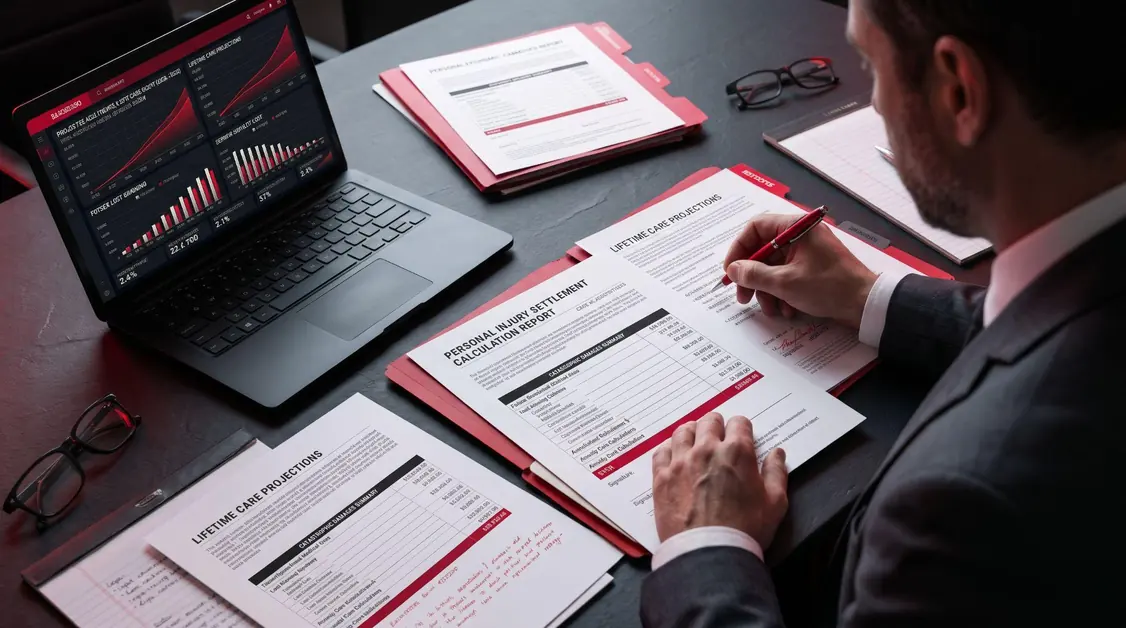

A claim’s potential value depends on both the provable losses and the rules governing recovery. Commonly considered categories include:
No estimate should be treated as a guaranteed settlement or verdict. An early evaluation may change as medical information, liability evidence, and damages documentation develop.
Experts may assist with particular disputed issues, but their opinions do not automatically establish liability, causation, or damages. The proper experts and methods depend on the case.
An expert’s credentials, methodology, factual basis, and fit with the issues in the case matter. In federal court, expert testimony is governed by Fed. R. Evid. 702; state courts apply their own applicable evidence rules. You can review our attorney credentials to learn more about our rigorous approach to expert evidence.

Catastrophic injury claims typically take twelve months to several years to resolve; strategic patience increases settlement value by documenting full medical damages, but arbitrary delay does not.
Timelines depend on case complexity, ongoing treatment, and whether full litigation is required. Many clients ask if waiting longer results in a larger financial recovery.
Strategic timing backed by aggressive investigation—not passive waiting—compels corporate insurers to pay maximum value.
Often, yes, but the effect depends on the jurisdiction. States use Comparative Negligence systems, including pure comparative-fault rules and modified systems that may bar recovery at a specified fault threshold. The accident location determines which fault rule applies. Do not assume that a 50 percent or 51 percent rule applies to a particular claim. Your share of fault may reduce the settlement amount or bar recovery at the applicable threshold.
Possible sources of recovery may include insurance companies providing underinsured motorist coverage, but availability depends on the policy language, applicable state law, notice and claim requirements, and other facts. Other potentially responsible parties or insurance policies may exist, but coverage is not automatic. Available policy limits can strongly affect the settlement value of a car accident claim. Cases involving permanent disability may have very high potential value but still be limited by available insurance coverage. An umbrella policy, for example, is not necessarily available to an injured claimant merely because one exists. Identifying every possible policy or responsible party may be important in seeking the maximum settlement.
Before giving a statement, consider who is requesting it and why, especially if insurance companies say they need it to evaluate a personal injury claim or car accident case. They may weigh injury severity along with liability when making a settlement offer. An insured may have contractual duties under their own policy, including cooperation requirements, depending on the policy and circumstances. Do not misstate facts, and consider reviewing any request and applicable policy obligations before responding. Our legal team can help assess whether the statement is necessary and how it could affect the claim.
No single formula applies in every case. A jury or other decision-maker may consider evidence such as the nature and duration of the injury, the nature and duration of medical treatment, limitations, prognosis, and effects on daily life when evaluating pain and suffering, subject to governing law and any applicable limits. “Multiplier” and “per diem” approaches are sometimes used in negotiation to estimate non-economic harm, including physical pain, and sometimes apply a figure to Medical Bills; a common multiplier used in negotiation is between 1.5 and 5, but these methods are not universal legal rules or guarantees of a particular award.
Police Reports may document initial observations and information gathered at the scene. It is one of several tools used to evaluate injury claims, not a complete investigation that alone proves fault, and it is often reviewed alongside repair estimates and medical evidence when evaluating property damage and injury-related losses. Other evidence, including witness accounts, photographs, video, physical evidence, and expert analysis, may support a reasonable settlement. Additional national roadway safety insights are provided by the Federal Highway Administration (FHWA).
A case-specific evaluation of a personal injury claim typically starts with the accident facts, medical records, information about losses, available insurance, and applicable deadlines. A free, confidential consultation from The Killino Firm can help identify potential issues, but no outcome or claim value can be guaranteed from an initial review. Speak with our personal injury lawyers for guidance, and we offer a free consultation.


The Killino Firm represents clients in personal injury cases involving serious or catastrophic injuries and fatal incidents. It has experience handling catastrophic injury cases, including traumatic brain injuries, broken bones, and, where relevant, medical malpractice claims involving healthcare providers, while helping make the process more stress free for clients through investigation, evaluation of available evidence, and representation in settlement negotiations and litigation. It also guides clients through the legal system with clear communication, explains legal terms, and helps families stay well informed throughout the legal process. Beyond seeking compensation, this advocacy can play a vital role in promoting accountability and helping prevent future injuries.
Call Me
We'll call you!
"*" indicates required fields
By submitting, you agree to be contacted about your request & other information using automated technology. Message frequency varies. Msg & data rates may apply. Text STOP to cancel. Privacy Policy
Text With Us
We'll text you!
"*" indicates required fields
By submitting, you agree to be contacted about your request & other information using automated technology. Message frequency varies. Msg & data rates may apply. Text STOP to cancel. Privacy Policy
Call Me
We'll call you!
By submitting, you agree to be contacted about your request & other information using automated technology. Message frequency varies. Msg & data rates may apply. Text STOP to cancel. Privacy Policy
Text With Us
We'll text you!
"*" indicates required fields
By submitting, you agree to be contacted about your request & other information using automated technology. Message frequency varies. Msg & data rates may apply. Text STOP to cancel. Privacy Policy
Email Us
We're available by email!
"*" indicates required fields
By submitting, you agree to be contacted about your request & other information using automated technology. Message frequency varies. Msg & data rates may apply. Text STOP to cancel. Privacy Policy
Book A Consultation
We're ready to answer your questions!