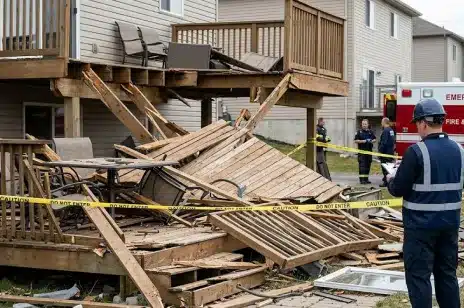
A deck collapse can happen when deteriorated materials, inadequate connections, construction errors or excessive loads cause part of a structure to fail. A person injured in a collapse may have a claim against a property owner, contractor or another responsible party, but the answer depends on the cause, control of the property and applicable law. Preserving the structure and documenting its condition can be as important as identifying who owned it.
A fall from a deck or porch can cause injuries even when the entire platform does not collapse. A railing can give way, a stair can detach or a section of flooring can break beneath someone. These incidents deserve a careful investigation rather than an assumption that the injured visitor simply lost their footing.
What Was Reported About the Williamsburg Porch Collapse Near William & Mary?
The Flat Hat reported on October 24, 2026 that a porch collapsed the previous evening at an off-campus home rented by William & Mary students in Williamsburg. Its initial account reported 28 people taken to hospitals. Those early reports do not establish the final medical outcomes or the structural cause.
The incident should not be described as proof of a particular owner’s or contractor’s liability before the evidence is reviewed. Questions about construction, maintenance, occupancy and loading require an investigation. This is the same distinction that matters in other deck failures: the fact of a collapse and its legal cause are related but separate issues.
Why Do Decks Fail?
A deck depends on a connected system of boards, joists, beams, posts, footings and fasteners. Where it is attached to a building, the connection must transfer loads safely into the structure. Failure in one important connection can cause a much larger section to separate or fall. The visible damage after a collapse may therefore be far greater than the original defect.
Water intrusion and decay can weaken wood concealed behind siding or underneath the deck. Metal connectors can corrode, fasteners can pull out and posts can shift when their supports deteriorate. An older deck may also have been altered without adequate consideration of the additional weight or the condition of the original supports. Appearance alone does not establish structural safety.
An investigation should distinguish a design problem from improper installation and a maintenance failure. Those explanations can overlap. For example, an unsuitable connection might deteriorate over time while repeated complaints about movement go unaddressed. Identifying that sequence helps determine who had an opportunity and responsibility to prevent the injury.
Does a Ledger Connection Explain Every Deck Collapse?
No. A ledger board and its attachment to a building can be important in an attached deck failure, but they do not explain every accident. A freestanding deck has a different support arrangement. A railing, stair, post or footing can fail independently, and a balcony may involve different materials and engineering requirements.
It is not appropriate to assume that a particular component caused a collapse because an online statistic says it causes most failures. A structural engineer can examine the actual construction, fracture patterns, connection details and photographs taken before debris was moved. The useful question is what failed at this property and why, rather than which general explanation is most commonly repeated.
What Is the Difference Between a Deck Collapse and a Slip and Fall?
A structural failure involves a deck, porch, railing or related component breaking, separating or becoming unable to support its intended use. A conventional slip and fall may instead involve a slick surface, poor lighting, a concealed change in elevation or another walking hazard on an otherwise intact structure. Both can involve premises liability, but the evidence is different.
For a broken railing, investigators may need the actual hardware and records of prior repairs. For a slippery deck, photographs of standing water, surface treatment and weather conditions may matter more. Our slip and fall lawyer page explains how dangerous property conditions and notice are evaluated. When both a surface hazard and structural weakness contributed, neither should be overlooked.
Who May Be Liable for a Porch or Deck Collapse?
Potential responsibility can involve an owner, landlord, property manager, contractor or another party whose conduct contributed to the failure. Ownership is a starting point, not a complete answer. Lease provisions, maintenance contracts, construction records and the actual control exercised over the area can help identify the relevant duties.
A landlord who received complaints about a moving railing presents different facts from a contractor who recently installed an inadequate connection. A business using an elevated outdoor seating area may have inspection and maintenance issues that differ from a private residence. Applicable state law determines the legal standards, including when knowledge of a dangerous condition must be established.
The injured person’s relationship to the property can also matter. A visitor, tenant and worker may have different legal issues. If someone was injured while building or repairing the deck, the interaction between a workplace claim and claims against other parties requires separate attention. Our construction injury page discusses that broader setting.
Can Overcrowding or Added Weight Contribute to Deck Failure?
Yes. Occupants, furniture, planters, equipment and other loads can contribute to a structural failure. But the presence of several people does not by itself prove that they caused the collapse. Investigators need to consider the deck’s design, condition, intended use and the loading at the time of the incident.
An owner may point to a gathering as an explanation while an engineer finds a connection that was inadequate for ordinary use. In another case, significant alterations or unusual equipment may have changed the demands on the structure. Photographs, witness descriptions and measurements can help test these competing explanations without treating an early accusation as an established fact.
What Injuries Can Result From a Fall From a Deck or Porch?
The height of the fall, landing surface and falling debris all affect the injuries. A person may sustain fractures, a head injury, spinal damage or injuries from being trapped beneath the structure. Several people falling together can make it difficult to reconstruct each person’s movements, especially during the initial emergency response.
Some consequences become clearer after the immediate crisis. A person with a brain injury may need evaluation of persistent cognitive or balance problems. Spinal injuries can affect mobility, employment and long-term care. The medical record should document symptoms and treatment over time rather than relying only on the first emergency department assessment.
What Should You Do After a Deck Collapse?
Emergency medical care and avoiding further collapse come first. Call emergency services and follow responders’ directions. Do not reenter an unstable deck, crawl under damaged supports or try to recover an item from a structure that may move again. If you can safely document the scene from a secure location, photographs can help preserve conditions before emergency cleanup.
Keep the names and contact details of witnesses, the property address and available incident report information. Retain medical records and communications about the event. If an insurer or property representative requests a statement, describe what you actually observed rather than guessing about the construction or agreeing with an explanation you cannot verify.
Why Should the Structure Be Preserved Before Repairs?
The debris may contain the clearest evidence of the original failure. Broken fasteners, decayed wood, separated connections and previous repair materials can help an expert determine what happened. Once a contractor removes and discards everything, important questions can become harder to answer.
Emergency stabilization may be necessary to protect people. Evidence preservation should work alongside that need, with photographs, measurements and appropriate retention of relevant components when feasible. A lawyer can seek timely preservation of records and physical evidence and arrange an inspection rather than leaving the injured person to negotiate technical access alone.
Can an Engineer Identify Warning Signs That Existed Before the Accident?
An engineer may be able to explain whether deterioration, movement or an inadequate connection existed before the collapse. Earlier inspection reports, repair invoices, photographs and complaints can add context. Records of water damage, temporary braces or repeated tightening of loose components may be particularly relevant.
Those findings do not automatically establish a legal claim. They must be connected to the applicable duties and the cause of the injury. A technically defective condition that did not contribute to the accident should not be substituted for proof of the condition that actually caused the collapse.
How Can Owners Reduce the Risk of Deck Failure?
Owners should have concerns about structural movement, rot, corrosion, loose railings or separation from the building assessed by a qualified professional. Covering damaged wood or making an improvised repair can conceal the problem without restoring the structure’s capacity. A deck that appears unstable should not remain open to visitors while the owner waits to see whether it gets worse.
Inspection needs depend on age, materials, exposure and use. A crowded commercial deck may require different management from a small residential porch. A professional can evaluate applicable requirements and appropriate repairs. This is not a situation in which an online checklist can certify that a structure is safe.
What Compensation May Be Available After a Collapse Injury?
Depending on the claim, recoverable losses may include medical treatment, rehabilitation, lost earnings and the effects of pain and disability. Serious injuries may require assessment of future care and reduced earning capacity. When someone dies, surviving family members may need advice about a wrongful death claim, including who is entitled to bring it under the applicable law.
There is no reliable standard settlement amount for a deck injury. Responsibility, the available evidence, medical needs and insurance coverage all influence an individual case. Reporting an incident promptly and investigating before repairs erase the evidence can help protect the ability to evaluate those issues.
How Can The Killino Firm Help Evaluate a Deck Collapse?
The Killino Firm handles serious injury matters involving dangerous property and other preventable hazards. A deck collapse investigation may require review of construction history, maintenance records, witness accounts and engineering findings, alongside the injured person’s medical needs. The purpose is to identify the actual cause and responsible parties rather than assume every collapse has the same explanation.
If you or a family member was injured in a porch, balcony or deck failure, contact The Killino Firm for a confidential case evaluation. Keep available photographs and documents, and explain whether the structure has already been repaired or removed so evidence preservation can be addressed promptly.